






What's Happening?
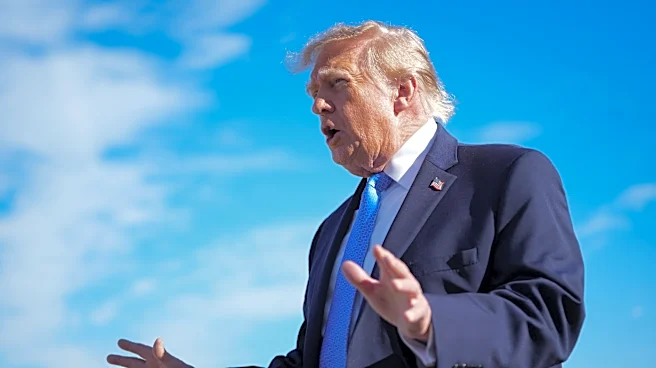
MS NOW host Rachel Maddow has voiced concerns that President Trump might not adhere to traditional electoral processes for presidential succession, instead opting to appoint a family member. During an appearance on The Poynter Institute podcast, Maddow discussed
the possibility of President Trump attempting to ensure a family member assumes power after him. She suggested that this move would be driven by a desire to protect family wealth and prevent prosecution for alleged 'ill-gotten gains' accumulated during his time in office. Maddow characterized President Trump as an 'authoritarian guy' who, in a 'kleptocratic phase,' would prioritize family enrichment and continuity of power. While she believes such a scenario would require force, she doesn't envision the public willingly voting for his sons. Maddow also expressed a belief that in a decade, the MAGA movement will have faded, and people will be reluctant to admit having voted for President Trump.
Why It's Important?
Maddow's concerns highlight a significant potential threat to democratic norms and institutions in the United States. The idea of a president attempting to bypass elections for succession directly challenges the foundational principles of a democratic republic, where leaders are chosen by the people through free and fair elections. This scenario, if attempted, could trigger a constitutional crisis, leading to widespread civil unrest and a severe erosion of public trust in the electoral system. For the U.S. political landscape, it would represent an unprecedented move towards authoritarianism, with profound implications for the rule of law, civil liberties, and international standing. The discussion also underscores the ongoing debate about the accountability of political leaders and their families, particularly concerning financial dealings and potential abuses of power.
What's Next?
The immediate future would depend on the specific actions President Trump might take and the reactions of various institutions. Any attempt to circumvent the electoral process would likely be met with strong opposition from Congress, the judiciary, and civil society organizations. Legal challenges would be swift and intense, potentially leading to a constitutional showdown. Public protests and demonstrations would also be highly probable. The military's role in upholding the Constitution would become a critical factor. The long-term consequences could include a re-evaluation of presidential powers, reforms to electoral processes, and a renewed focus on safeguarding democratic institutions against authoritarian tendencies. The political climate would remain highly volatile, with significant implications for national unity and stability.
Beyond the Headlines
The deeper implications of Maddow's concerns extend to the very definition of American identity and its commitment to democratic values. The notion of a dynastic succession, driven by personal enrichment and a desire to evade legal consequences, challenges the ideal of public service and the principle that no one is above the law. This scenario could expose vulnerabilities in the U.S. system of checks and balances, prompting a critical examination of how democratic institutions can be strengthened to resist authoritarian pressures. It also raises ethical questions about the role of family in politics and the potential for conflicts of interest. Ultimately, this discussion serves as a stark reminder of the fragility of democratic norms and the constant vigilance required to preserve them against forces that seek to undermine the peaceful transfer of power and the rule of law.