





What's Happening?
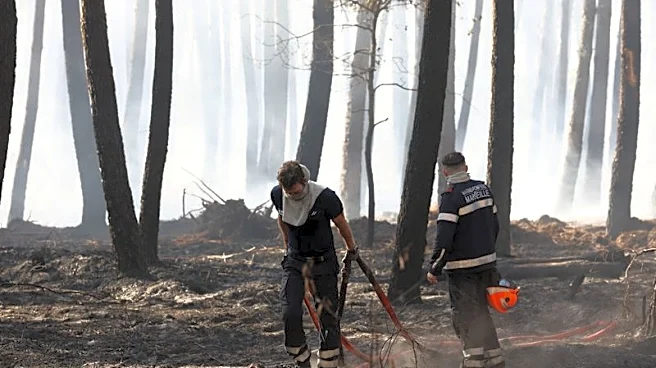
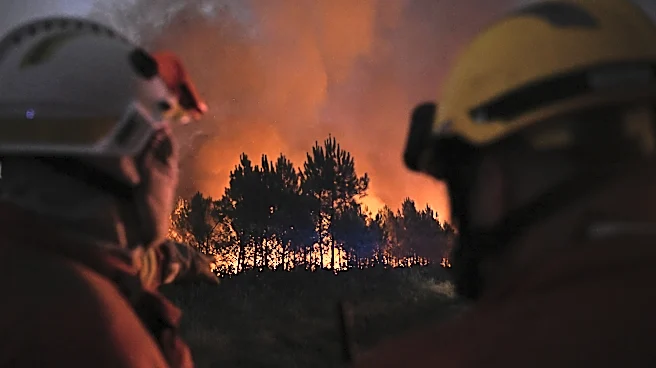
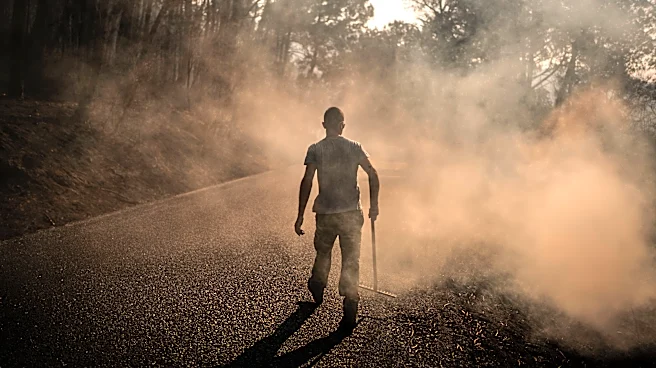
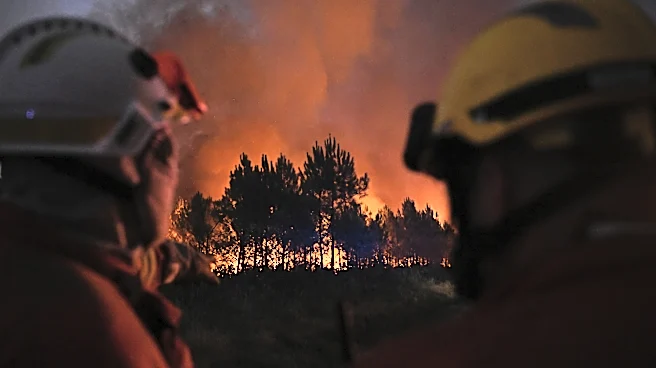
A massive wildfire in southwest France has led to the evacuation of more than 220,000 people, marking one of the largest evacuations in Europe since World War II. The fire, which has consumed an area four times the size of Paris, has been difficult to control
despite efforts from multiple countries. The blaze has affected numerous towns and villages, with some being completely ravaged by the fire. The situation escalated when a mobile phone alert was sent out at 2:47 a.m., urging residents to evacuate immediately. The fire has been described as a self-feeding firestorm, capable of spitting lightning bolts that ignite further flames. The Gironde region, where the fire is most intense, has seen a significant number of evacuations, with additional evacuations occurring in Spain due to historic wildfires.
Why It's Important?
The wildfire in France highlights the increasing frequency and intensity of natural disasters, which are exacerbated by climate change. The scale of the evacuation underscores the severity of the situation and the challenges faced by emergency services in managing such large-scale disasters. The event has significant implications for public safety, emergency preparedness, and environmental policies in Europe and beyond. It also raises concerns about the future, as successive heat waves and dry conditions make such extreme events more likely. The economic impact is also considerable, with potential damage to infrastructure, homes, and local economies.
What's Next?
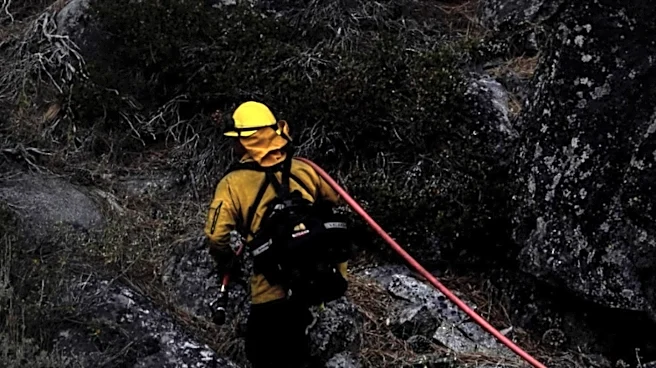
Authorities have stated that evacuees will not be allowed to return until the fire is contained. However, some areas that have not been directly affected by the fire have been cleared for return. The ongoing efforts to control the fire involve fire trucks and aircraft dropping water and retardant. The situation remains fluid, with the potential for further evacuations if the fire spreads. The long-term focus will likely be on improving fire management strategies and addressing the root causes of such extreme weather events, including climate change.
Beyond the Headlines
The wildfire serves as a stark reminder of the broader implications of climate change, particularly in terms of its impact on natural disasters. The increasing frequency of such events poses significant challenges for governments and communities, necessitating a reevaluation of current environmental policies and disaster preparedness plans. The psychological and social impact on evacuees, who face uncertainty and potential loss, is also a critical aspect that requires attention. The event may prompt discussions on international cooperation in disaster management and climate change mitigation.