



What's Happening?
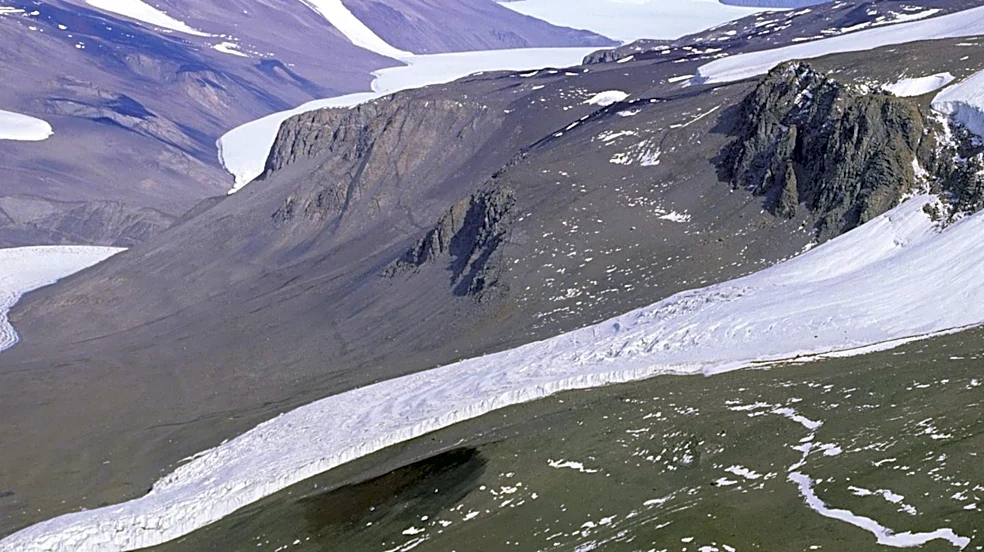
Two geologists, Bei Chen of the GFZ Helmholtz Centre for Geosciences and Ian H. Campbell of the ANU Research School of Earth Sciences, propose that the erosion of Himalayan-style mountains, now buried under Antarctic ice, played a crucial role in setting
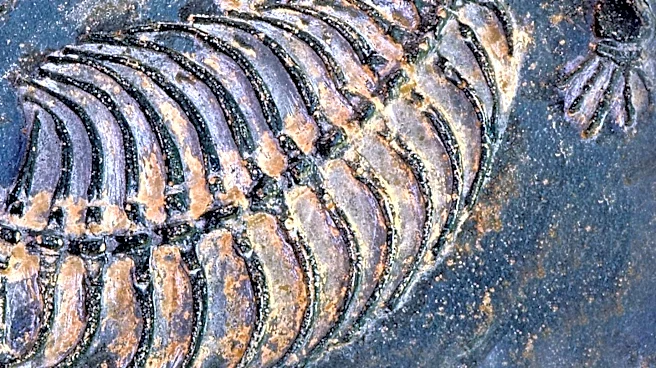
the stage for the Cambrian explosion. Their research, published in Earth and Planetary Science Letters, analyzed 1,712 zircon crystals drilled from the seafloor around Antarctica. These crystals, worn from their parent rock by erosion, indicate the presence of significant mountain-building events between 650 million and 450 million years ago, coinciding with the assembly of the supercontinent Gondwana. The study suggests that the erosion of these 'supermountains' released essential nutrients like phosphorus and iron into the oceans, which in turn 'fertilized' marine life and supercharged biological cycles, leading to increased complexity and the rapid diversification of animal life during the Cambrian period, approximately 538 million years ago. This theory builds upon previous work that linked the Gondwana range to the rise of animals.
Why It's Important?
This research offers a significant geological explanation for one of Earth's most pivotal evolutionary events, the Cambrian explosion, which saw the emergence of most major animal groups. Understanding the environmental triggers of such a rapid diversification of life provides crucial insights into the interplay between geological processes and biological evolution. The findings highlight how large-scale geological phenomena, such as mountain formation and erosion, can profoundly impact global nutrient cycles and atmospheric composition, directly influencing the trajectory of life on Earth. This perspective underscores the interconnectedness of Earth's systems and offers a framework for studying similar evolutionary leaps in the planet's history. It also emphasizes the importance of studying ancient geological records, even those hidden beneath ice sheets, to reconstruct past environmental conditions and their biological consequences.
What's Next?
Further research will likely focus on corroborating these findings through additional geological and paleontological studies. Scientists may seek more evidence of nutrient runoff from ancient mountain ranges and its direct impact on marine ecosystems during the Cambrian period. This could involve analyzing sedimentary records from other regions that were part of Gondwana or developing more sophisticated models to simulate the effects of such large-scale erosion on ocean chemistry and atmospheric oxygen levels. The study also opens avenues for investigating whether similar geological events preceded other periods of significant biological innovation or extinction throughout Earth's history. The ongoing exploration of Antarctica's subglacial geology could provide more direct evidence of these ancient mountain roots, further strengthening or refining the proposed hypothesis.
Beyond the Headlines
The concept that geological processes can directly drive major evolutionary leaps has profound implications for our understanding of life's origins and development. It suggests that the 'boring billion' — a period of relative evolutionary stasis between 1.8 billion and 800 million years ago — might be directly linked to the absence of supermountains and thus a reduced supply of nutrients to the oceans. This highlights a dynamic relationship where Earth's physical landscape acts as a critical sculptor of biological diversity. The study also subtly reinforces the idea that seemingly disparate scientific fields, like geology and evolutionary biology, are deeply intertwined, with discoveries in one often shedding light on mysteries in the other. It encourages a holistic view of Earth's history, where the planet's crust, oceans, atmosphere, and biosphere are all active participants in a grand, co-evolving system.