






What's Happening?
The NATO Innovation Fund (NIF), a €1 billion venture capital fund supported by 24 member states, has established a presence in Warsaw, Poland. This move reflects Poland's growing strategic importance as a logistical and industrial hub supporting Ukraine
and its proximity to the ongoing conflict. The NIF's expansion aims to accelerate the adoption of dual-use technologies, particularly those focused on counter-drone systems, autonomous technologies, and space-based surveillance. The decision is driven by lessons learned from the war in Ukraine, which has demonstrated the significant threat posed by inexpensive unmanned systems to military formations, critical infrastructure, and civilian areas. The fund will work with technology companies, investors, government agencies, and military organizations across Central and Eastern Europe to identify and scale promising prototypes into operational systems. Jan Duthel has been appointed to lead regional technology adoption for the NIF.
Why It's Important?
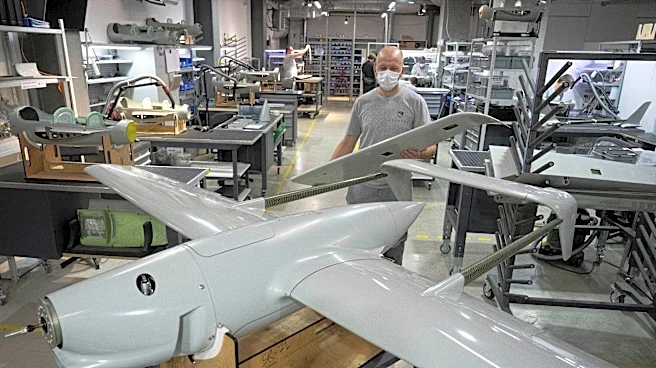
This expansion is crucial for NATO's adaptation to modern warfare, where drone technology has fundamentally reshaped defense investment priorities. Traditional air defense systems were primarily designed for larger, conventional threats, making them less effective and economically unsustainable against swarms of small, low-cost drones. The NIF's focus on counter-drone technologies, including affordable sensors, autonomous interceptors, and integrated command software, addresses a critical gap in current defense capabilities. By investing in these areas, NATO aims to develop layered defense systems capable of managing numerous targets with economically sustainable engagement costs. Poland's role as a center for this innovation is significant due to its substantial defense investments, its logistical support for Ukraine, and its large engineering workforce. This initiative seeks to bridge the gap between promising prototypes and mass-produced, operationally ready systems, ensuring that NATO members can effectively protect their troops and infrastructure from unmanned attacks.
What's Next?
The NATO Innovation Fund's presence in Warsaw is expected to facilitate easier access to investors for technology companies in Poland and neighboring countries, particularly those developing solutions for military requirements. The success of this initiative will depend on effective cooperation between the fund, military customers, and established industrial partners to ensure that investments lead to deployable technologies rather than remaining in experimental development. New systems will undergo rigorous testing against realistic operational conditions, including electronic interference and adverse weather. The NIF's approach aims to incorporate flexibility into defense acquisition, learning from Ukraine's experience where battlefield conditions can change rapidly. This will likely lead to a broader shift in European military investment, with increased focus on software, sensors, autonomous systems, and rapid production capabilities, particularly in Central and Eastern Europe.
Beyond the Headlines
The NIF's move into Poland signifies a deeper recognition within NATO of the evolving nature of geopolitical threats and the need for technological agility. It underscores a shift from traditional, long-cycle defense procurement to a more venture capital-like approach, investing in startups and emerging technologies. This could foster a more dynamic defense industrial base in Europe, reducing reliance on established manufacturers and promoting innovation from smaller, specialized companies. However, challenges remain in navigating complex procurement procedures, security certifications, and integration requirements to transition these innovations into widespread military adoption. The initiative also highlights the increasing importance of dual-use technologies, blurring the lines between civilian and military applications and potentially leading to new ethical and regulatory considerations regarding technology transfer and control. The long-term success will be measured by NATO's ability to integrate these new capabilities effectively and maintain a technological edge against adversaries.