





What's Happening?
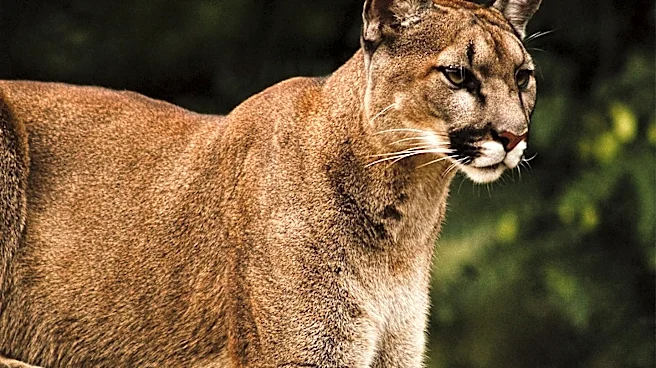
A mountain lion that was captured on Friday morning after being found in San Francisco's Sunset District has been successfully relocated to a wild habitat in the Santa Cruz Mountains. The California Department of Fish and Wildlife, through Information
Officer Peter Tira, confirmed the efforts to ensure the animal's safe transfer. The presence of a mountain lion in an urban area like San Francisco is an unusual occurrence, prompting a swift response from wildlife authorities to capture and rehome the animal. The relocation aims to ensure the safety of both the mountain lion and the city's residents, returning the animal to a more natural environment where it can thrive without human interference.
Why It's Important?
The successful relocation of the mountain lion highlights the ongoing challenges and successes in wildlife management within increasingly urbanized areas. As human populations expand, encounters between wildlife and urban environments are becoming more frequent, necessitating effective strategies for coexistence and conservation. This event underscores the importance of rapid response protocols by wildlife agencies to safely manage such situations, preventing potential harm to both animals and people. It also brings attention to the health of local ecosystems, as the presence of apex predators like mountain lions can indicate the availability of prey and suitable habitats, even if these animals occasionally venture into human-dominated spaces. The incident serves as a reminder of the need for public awareness regarding wildlife presence and the appropriate actions to take during such encounters.
What's Next?
Following the successful relocation, wildlife authorities will likely continue to monitor the mountain lion's adjustment to its new habitat in the Santa Cruz Mountains. This monitoring helps assess the effectiveness of relocation efforts and provides valuable data for future wildlife management strategies. Public education campaigns may also be reinforced to inform San Francisco residents about how to react if they encounter wildlife in urban settings, emphasizing safety and non-interference. Additionally, discussions might arise regarding urban planning and conservation efforts aimed at maintaining wildlife corridors and reducing human-wildlife conflict as urban development continues to encroach on natural habitats. The incident could also prompt further research into mountain lion movements and population dynamics in the broader Bay Area region.
Beyond the Headlines
This event touches upon the broader ecological implications of urban sprawl and habitat fragmentation. The appearance of a mountain lion in a densely populated area like San Francisco suggests that these animals are adapting to, or being displaced into, human environments. It raises questions about the long-term viability of wildlife populations in areas adjacent to major cities and the necessity of preserving contiguous natural spaces. The incident also sparks a conversation about public perception of wildlife, balancing fear with appreciation for biodiversity. It underscores the ethical considerations involved in managing wild animals that stray into human territory, emphasizing humane capture and relocation over more drastic measures. Ultimately, it highlights the interconnectedness of urban and natural ecosystems and the critical role of conservation in maintaining ecological balance.