



What's Happening?
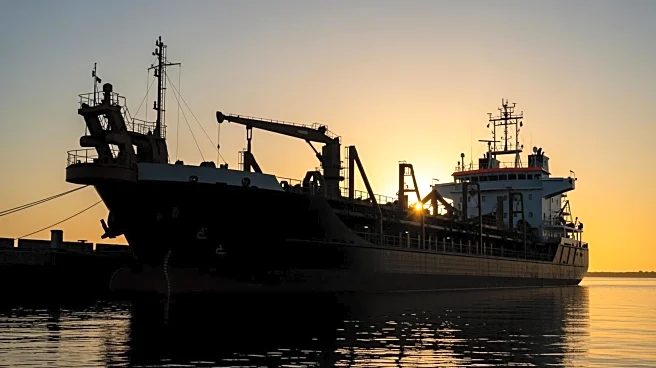
Manson Construction Co. has taken delivery of the Frederick Paup, the largest self-propelled hopper dredge in the United States, from the Seatrium AmFELS shipyard in Brownsville, Texas. This vessel represents Manson's largest investment since its founding
in 1905. Designed in collaboration with Hockema Whalen Myers Associates, Inc., the dredge boasts next-generation capabilities, including increased speed, capacity, and fuel efficiency. The 420-foot-long dredge, with a hopper capacity of over 15,150 cubic yards, is equipped with Tier 4 diesel-electric engines and advanced hull design to reduce emissions. The Frederick Paup is set to begin its inaugural project in Mobile, Alabama, performing maintenance dredging for the U.S. Army Corps of Engineers to ensure navigation access for deep-draft vessels.
Why It's Important?
The launch of the Frederick Paup marks a significant advancement in U.S. maritime infrastructure, enhancing the country's ability to maintain and improve its waterways. This development is crucial for supporting the U.S. Army Corps of Engineers' mission to keep marine transportation routes open, which is vital for economic activities and trade. The dredge's advanced features and sustainable design reflect a commitment to environmental stewardship and operational efficiency. As the largest U.S.-built, flagged, and crewed dredge, it underscores the importance of domestic manufacturing and innovation in strengthening national infrastructure and resilience.
What's Next?
The Frederick Paup will commence its operations in Mobile, Alabama, focusing on maintenance dredging projects. This initiative is part of Manson Construction's broader efforts to support critical infrastructure and coastal resilience across the United States. The company's continued investment in advanced maritime technology and infrastructure projects is expected to enhance its competitive position and contribute to the sustainability of the nation's waterways. Stakeholders, including government agencies and maritime industries, will likely monitor the dredge's performance and its impact on improving navigation and trade routes.