
What's Happening?
In January 2026, a government-backed innovation program in Madhya Pradesh highlighted the growing importance of smart agriculture careers. This initiative brought together students, startups, and researchers to explore how technology can address challenges
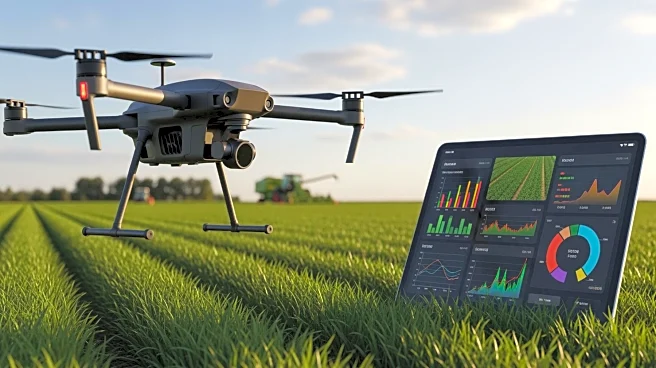
such as water stress, crop losses, and rising costs in agriculture. The focus was on practical, field-ready solutions rather than theoretical discussions. This shift towards smart agriculture is driven by the government's emphasis on digital and precision-led farming to combat climate and resource stress. Initiatives like the Digital Crop Survey and micro-irrigation schemes under the Pradhan Mantri Krishi Sinchayee Yojana are examples of this trend. These developments are creating new professional roles in agriculture that require expertise in technology, data, and sustainability.
Why It's Important?
The transition to smart agriculture is significant as it aligns with global demands for sustainable food systems and environmental conservation. This shift is creating a demand for professionals who can integrate technology with traditional farming practices. As agriculture becomes more data-driven, roles such as precision farming specialists, agri-technology professionals, and sustainable agriculture experts are becoming crucial. These careers not only offer students meaningful work but also contribute to national development and food security. The focus on smart agriculture is also a response to climate change challenges, making it a future-critical field. Educational institutions like Shoolini University are adapting their programs to prepare students for these emerging roles, ensuring they have the skills needed to thrive in this evolving sector.
What's Next?
As smart agriculture continues to gain traction, educational institutions are likely to expand their offerings in this area, providing more specialized programs and hands-on training. Government policies may further support this transition by investing in technology and innovation in agriculture. The collaboration between academia, industry, and government will be crucial in developing a skilled workforce capable of addressing the challenges of modern agriculture. Students entering this field can expect to engage in roles that involve data analysis, technology implementation, and sustainable practices, contributing to a more resilient agricultural sector.
Beyond the Headlines
The move towards smart agriculture also raises ethical and cultural considerations. As technology becomes more integrated into farming, there may be concerns about data privacy and the digital divide between rural and urban areas. Additionally, the shift may impact traditional farming communities, requiring careful management to ensure that technological advancements benefit all stakeholders. The long-term implications of smart agriculture could include changes in land use, rural employment patterns, and food production systems, necessitating ongoing dialogue and adaptation.