










What's Happening?
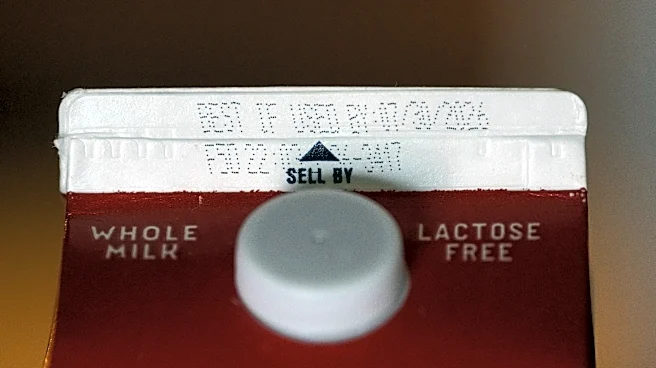
California has enacted a new law aimed at reducing food waste by prohibiting the use of 'sell by' labels on food products. Instead, manufacturers are now required to use 'use by' or 'freeze by' labels to indicate when food is no longer safe to consume.
This legislative change is part of a broader effort to address food waste, which is a significant environmental and economic issue. The law seeks to provide clearer guidance to consumers about food safety, thereby reducing the amount of edible food that is discarded prematurely due to confusion over labeling.
Why It's Important?
The new labeling requirement in California is significant as it addresses the widespread issue of food waste, which has both environmental and economic implications. By eliminating 'sell by' labels, which are often misunderstood by consumers as indicators of food safety, the law aims to reduce the amount of food that is unnecessarily thrown away. This change could lead to a decrease in food waste, which is a major contributor to greenhouse gas emissions. Additionally, it could result in cost savings for consumers who might otherwise discard food that is still safe to eat. The law also sets a precedent that could influence similar legislative efforts in other states, potentially leading to a nationwide shift in food labeling practices.
What's Next?
As the law takes effect, food manufacturers in California will need to adjust their labeling practices to comply with the new requirements. This may involve changes in packaging and production processes. Consumer education campaigns may also be necessary to inform the public about the new labels and their meanings. Other states may observe the outcomes of this legislation and consider implementing similar measures. The success of this initiative could prompt further legislative action aimed at reducing food waste and improving food safety across the United States.