





What's Happening?
Recent research challenges long-held beliefs about the construction of Egypt's pyramids, revealing that they were built by paid workers rather than slaves and were located near a now-vanished river. An inspector named Merer kept a detailed logbook, part
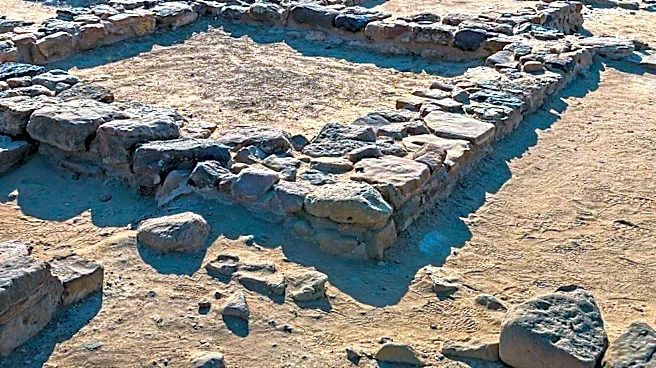
of the oldest inscribed papyrus corpus found in Egypt, documenting the logistics of pyramid construction. This logbook, discovered at Wadi al-Jarf, provides insights into the supply operations and the use of water transport for moving limestone to the pyramids.
Why It's Important?
These findings reshape our understanding of ancient Egyptian society and the construction of the pyramids. The revelation that paid workers, rather than slaves, built the pyramids challenges previous narratives and highlights the complexity of ancient labor systems. Additionally, the proximity to a river suggests advanced logistical planning and infrastructure, emphasizing the sophistication of ancient Egyptian engineering. This research contributes to a more nuanced view of history and the capabilities of ancient civilizations.