





What's Happening?
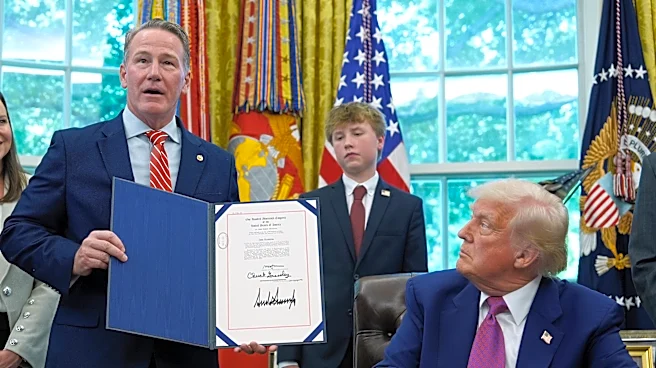
President Trump has pledged his support for a $1 billion proposal aimed at restoring pensions for salaried Delphi retirees. This commitment was made during an October 3 rally in Vandalia, following a private meeting with retirees whose pensions were cut
after the auto parts manufacturer's 2009 bankruptcy. U.S. Rep. Mike Turner, R-Dayton, who helped arrange the meeting, highlighted the 17-year struggle by these retirees, an issue affecting over 5,100 Ohioans. President Trump attributed the pension cuts to "problems caused by Barack Obama’s policies" and emphasized his administration's involvement in resolving the matter. The proposed restoration plan still requires approval from both chambers of Congress and President Trump’s signature to become law. U.S. Sen. Jon Husted, R-Ohio, is also actively pushing for this measure.
Why It's Important?
The potential restoration of Delphi retirees' pensions carries significant implications for thousands of individuals and sets a precedent for government intervention in private pension disputes. For the more than 5,100 Ohioans affected, this proposal offers renewed hope for financial security after years of uncertainty. The involvement of President Trump and key congressional figures like U.S. Rep. Mike Turner and U.S. Sen. Jon Husted underscores the political weight and public pressure surrounding this issue. This situation highlights the vulnerability of private pensions during corporate bankruptcies and the long-term impact on retirees. A successful resolution could influence future policy discussions regarding pension protections and the role of the federal government in mitigating the financial fallout from corporate failures, particularly in industries with a strong union presence or significant economic footprint.
What's Next?
The next critical steps for the Delphi pension restoration plan involve securing approval from both the House and Senate, followed by President Trump's signature. U.S. Rep. Mike Turner and U.S. Sen. Jon Husted are actively advocating for the measure's passage through Congress. The legislative process will likely involve debates on the funding mechanism for the $1 billion proposal and its broader implications for federal spending and pension policy. Retiree associations and advocacy groups will continue to monitor the progress closely, maintaining pressure on lawmakers. Should the plan pass, it would provide a significant financial relief to the affected retirees. Conversely, failure to pass could lead to renewed calls for legislative action and potentially impact the political standing of those who championed the cause.
Beyond the Headlines
Beyond the immediate financial relief for Delphi retirees, this development touches upon deeper issues of corporate responsibility, government oversight, and the social contract between employers and employees. The 17-year fight for pension restoration highlights the systemic challenges faced by workers when companies undergo bankruptcy, particularly when government entities are involved in the restructuring process. The blame attributed to past administrations by President Trump also underscores the politicization of economic policies and their long-term consequences. This case could serve as a powerful example in future discussions about strengthening pension insurance, reforming bankruptcy laws to better protect retirees, and ensuring accountability for corporate decisions that impact employee benefits. It also reflects the enduring power of sustained advocacy by affected communities in influencing national policy.