
What's Happening?
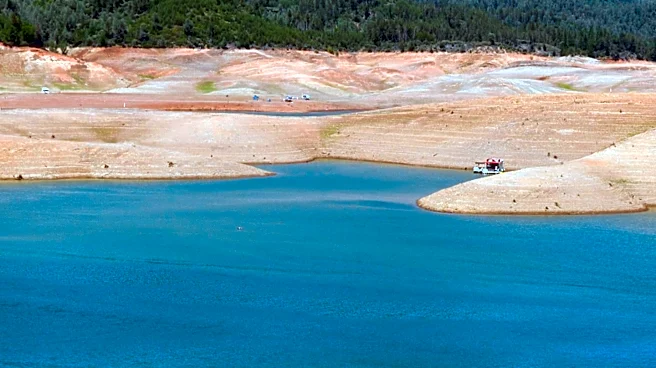
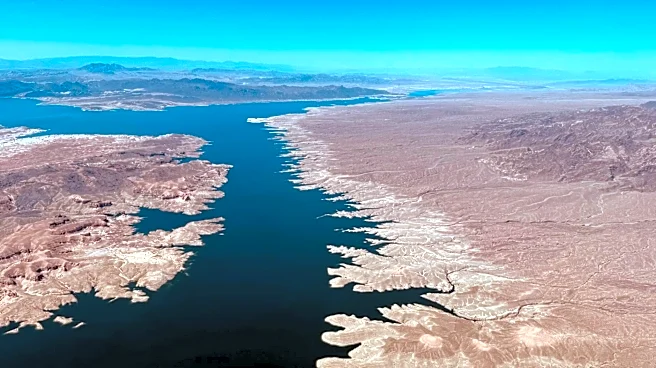
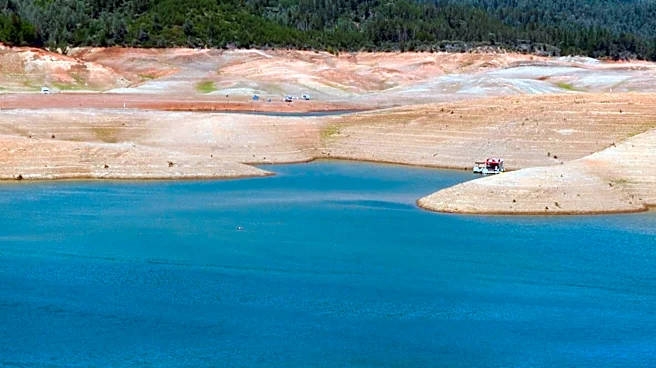
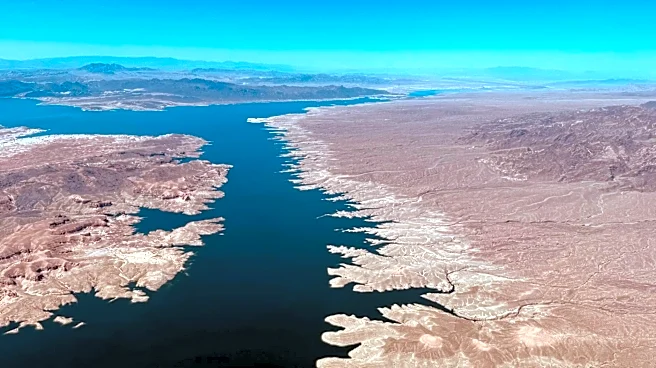
Lake Mead, the largest reservoir in the United States, has hit a record-low water level, exacerbating the water crisis in the drought-stricken Western U.S. The reservoir, crucial for water supply and hydroelectric power, has dropped to 1,040.5 feet, its
lowest since the 1930s. This decline follows years of drought and increasing water demand from the growing population in the region. Federal authorities have released a plan to address water shortages, which includes significant cuts to water usage by states in the Colorado River's lower basin, such as Arizona, California, and Nevada.
Why It's Important?
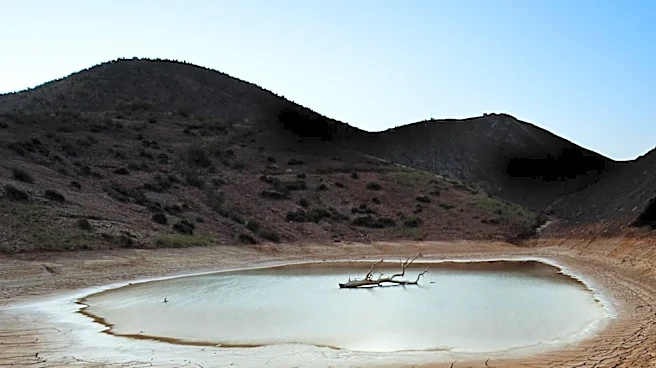
The record-low water levels at Lake Mead highlight the severe impact of climate change and prolonged drought on water resources in the Western U.S. This situation threatens water supply for millions of people and agricultural activities, as well as hydroelectric power generation. The federal plan to cut water usage is a critical step in managing the crisis, but it also poses challenges for states that rely heavily on the Colorado River. The situation underscores the urgent need for sustainable water management practices and cooperation among states, Native American tribes, and Mexico.
What's Next?
The federal government is expected to release additional details on its water management plan, which will require cooperation from all stakeholders to implement effectively. States will need to negotiate water usage reductions, and further measures may be necessary if drought conditions persist. The situation at Lake Mead serves as a warning for the need to address climate change impacts and develop long-term strategies for water conservation and resource management.