





What's Happening?
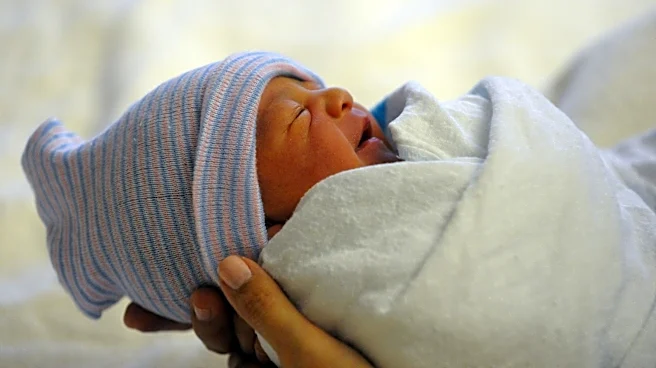
A new study published in JAMA Pediatrics reveals that the Rx Kids program in Flint, Michigan, has been associated with a substantial decrease in newborn mortality rates. Following the program's launch, neonatal mortality—deaths within the first 28 days
of life—fell by 50%, while early neonatal mortality—deaths within the first seven days—decreased by 74%. Researchers analyzed statewide birth and death records from 2021 through 2025, comparing Flint with the rest of Michigan. Before Rx Kids, Flint's neonatal mortality rate was 10.2 deaths per 1,000 live births, more than double the state average of 4.0. In 2025, one year after the program began, Flint's rate dropped to 5.1 deaths per 1,000 live births, while the rest of Michigan's rate remained largely unchanged at 3.9. This improvement has narrowed a long-standing disparity, making the differences in neonatal and early neonatal mortality between Flint and the rest of Michigan no longer statistically significant.
Why It's Important?
This research is critically important for U.S. public health and social policy, demonstrating that direct financial support during pregnancy and infancy can significantly improve infant survival rates at a population level. The Rx Kids program, the nation's first community-wide maternal and infant cash prescription initiative, provides $1,500 during pregnancy and $500 per month during infancy to participating families. This 'money as medicine' approach addresses economic insecurity, which is a known contributor to poor maternal and infant health outcomes. The findings build on earlier research that showed reductions in preterm births, low birth weight, and neonatal intensive care unit admissions in Flint following the program's implementation. These improvements in birth outcomes are directly linked to the observed decline in newborn deaths, highlighting the profound impact of economic stability on health equity and infant well-being.
What's Next?
Researchers plan to continue examining infant and maternal mortality as more years of data become available and as the Rx Kids program expands to additional communities. Future studies will investigate whether these positive outcomes are sustained over time and replicated across diverse populations and settings. The ongoing research will also delve deeper into the specific mechanisms through which financial support translates into improved maternal and infant survival, such as increased access to prenatal care, better housing stability, reduced food hardship, and improved maternal mental health. The success of Rx Kids in Flint could serve as a model for other U.S. communities grappling with high infant mortality rates, potentially influencing policy discussions around universal basic income or targeted cash transfer programs for vulnerable families.
Beyond the Headlines
The success of the Rx Kids program in Flint challenges conventional approaches to public health interventions by demonstrating the direct impact of economic support on health outcomes. It underscores the social determinants of health, illustrating how poverty and economic insecurity can profoundly affect the most vulnerable populations, particularly newborns. This initiative suggests a paradigm shift, where financial stability is recognized as a fundamental component of healthcare. The program's ability to narrow health disparities in Flint also raises questions about systemic inequalities and the role of policy in creating equitable health opportunities. It highlights the potential for innovative, community-led solutions to address complex public health challenges, moving beyond traditional medical interventions to tackle root causes of poor health.