









What's Happening?
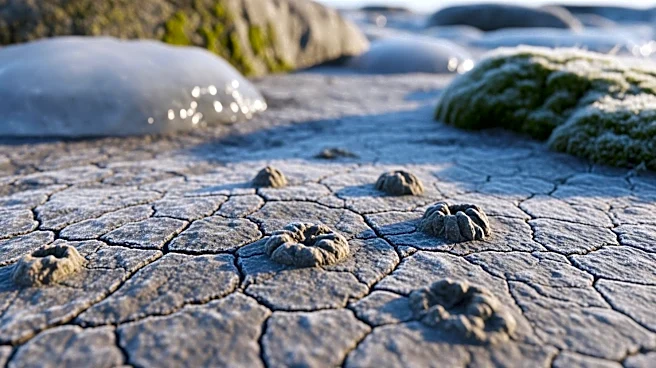
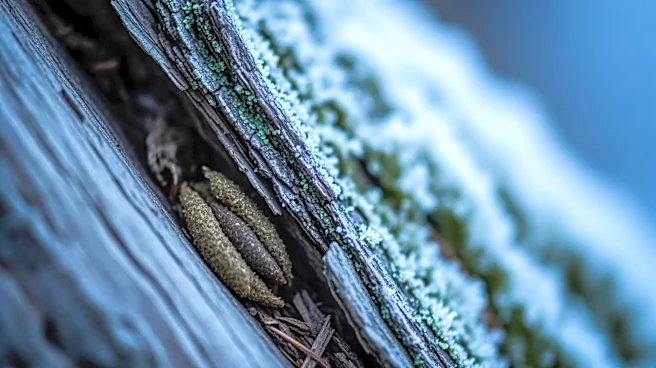
Researchers have uncovered a significant genetic archive from ancient squirrel droppings preserved in the permafrost of Canada's Yukon Territory. These droppings, dating back as far as 700,000 years, contain DNA from a variety of ice-age animals, including
woolly mammoths, steppe bison, and horses. The study, published in Nature Communications, highlights the role of Arctic ground squirrels in collecting and storing diverse genetic material in their burrows. This discovery provides a detailed genetic snapshot of the ancient Beringia region, which once connected Asia and North America during the last ice age. The research team, led by Tyler Murchie from the Hakai Institute, analyzed the coprolites, or fossilized feces, to reconstruct the environmental and ecological history of the area.
Why It's Important?
This discovery is crucial for understanding the evolutionary and ecological changes in the Beringia region over hundreds of thousands of years. The genetic material found in the squirrel droppings offers insights into the megafaunal evolution and extinction events of the ice age. By reconstructing ancient environments, scientists can better understand how climate and ecological shifts impacted large mammals and other species. This research not only sheds light on past biodiversity but also informs current conservation efforts by providing a historical baseline for species that once roamed these regions. The findings underscore the potential of ancient DNA studies to reveal hidden aspects of Earth's history.
What's Next?
The rich genetic data uncovered from these ancient droppings could lead to further discoveries about the Beringia region and its inhabitants. Researchers may continue to explore other permafrost-preserved materials to expand the genetic archive and gain more comprehensive insights into past ecosystems. This could involve collaborations with other paleogenomics projects to compare findings across different regions and time periods. Additionally, the methodologies developed in this study could be applied to other archaeological sites, potentially uncovering new information about ancient human and animal interactions.
Beyond the Headlines
The study of ancient squirrel droppings highlights the unexpected sources of valuable scientific data that can be overlooked. It emphasizes the importance of interdisciplinary research, combining paleogenomics, archaeology, and ecology to reconstruct past environments. This approach can reveal complex interactions between species and their habitats, offering lessons for modern conservation strategies. Furthermore, the findings contribute to the broader understanding of how ancient climate changes influenced biodiversity, providing context for current discussions on climate change and its impact on ecosystems.