





What's Happening?
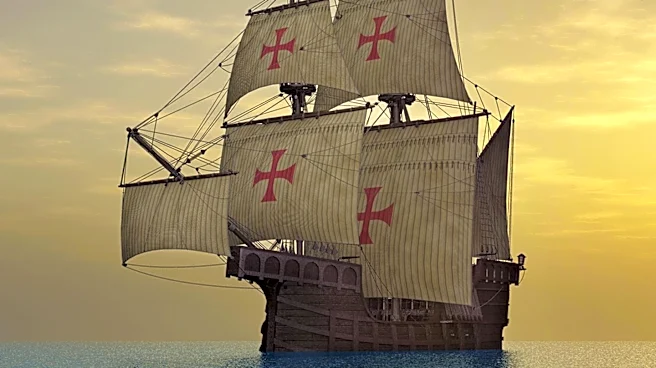
Christopher Columbus's voyages, beginning in 1492, are widely understood to have initiated sustained European contact with diverse civilizations in the Caribbean, rather than discovering an empty land. His arrival set in motion the Columbian Exchange,
a widespread transfer of plants, animals, culture, human populations, technology, diseases, and ideas between the Americas, West Africa, and the Old World. Before Columbus, the Americas were home to millions of people with advanced civilizations, intricate trade networks, and rich cultural traditions, including the Taíno people in the Caribbean and the Maya, Aztec, and Inca empires in Central and South America. Columbus's own journals reveal his perception of the inhabitants as potential subjects and laborers, and his observations were filtered through a lens of European superiority and mercantile ambition. While his voyages introduced new crops and animals to both hemispheres, they also led to devastating consequences, including the introduction of Old World diseases that decimated indigenous populations and the enslavement of Indigenous peoples, which subsequently fueled the demand for enslaved Africans.
Why It's Important?
The re-evaluation of Columbus's legacy is crucial for a more accurate understanding of American history and its global implications. Recognizing that Columbus did not 'discover' an empty continent but rather initiated a period of profound and often violent transformation challenges traditional narratives and highlights the pre-existing richness of indigenous cultures. The Columbian Exchange, while facilitating the global spread of crops and animals, also led to catastrophic demographic collapse among indigenous populations due due to disease and exploitation. This historical context is vital for understanding the roots of systemic inequalities, the impact of colonialism, and the ongoing struggles of indigenous communities. It also informs contemporary discussions about historical memory, cultural representation, and the importance of acknowledging multiple perspectives in historical accounts.
What's Next?
The ongoing re-evaluation of historical figures like Columbus is likely to continue, influencing educational curricula, public monuments, and national holidays. This shift in understanding encourages a more nuanced and inclusive approach to history, emphasizing the perspectives of those who were colonized and exploited. Future discussions will likely focus on how to appropriately commemorate historical events while acknowledging their full impact, including the suffering and resilience of indigenous peoples. This critical examination can lead to a deeper societal understanding of the complexities of historical events and their lasting repercussions on contemporary societies, fostering a more informed and empathetic citizenry.
Beyond the Headlines
Beyond the immediate historical facts, the discussion surrounding Columbus's 'discovery' delves into deeper ethical and cultural implications. It forces a confrontation with the concept of 'discovery' itself, questioning whose perspective defines such an event. The narrative highlights the power dynamics inherent in historical accounts and the importance of decolonizing historical narratives to include marginalized voices. The lasting impact of the Columbian Exchange, particularly the devastating effects of disease and slavery, continues to shape global demographics, economic systems, and social structures. This ongoing dialogue encourages critical thinking about how history is constructed, interpreted, and used to inform present-day identities and policies, fostering a more comprehensive and just understanding of the past.