





What's Happening?
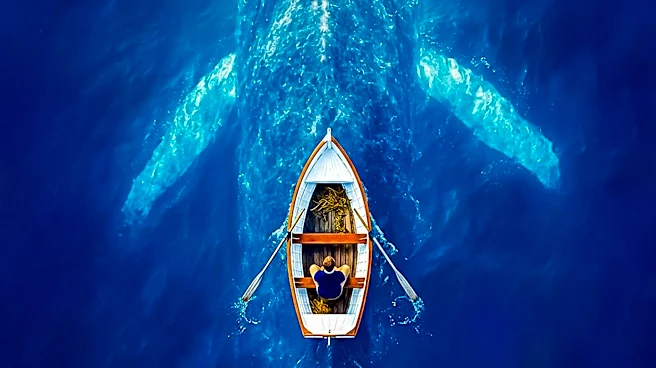
Jeremy and Jemma Cooper, a sailing couple, were rescued after their yacht, the Tai Tam, was struck by a sperm whale approximately 500 nautical miles off the coast of New Zealand. The couple reported feeling a significant lurch to the port side of their vessel,
realizing they had been hit by something substantial. Following the impact, they observed a pod of six sperm whales swimming behind their boat. The collision caused their yacht to take on water and eventually sink. The Coopers, along with two other sailors who were aboard the vessel, were forced to evacuate into a life raft. After 17 hours adrift, they were successfully rescued by a passing container ship. Despite the traumatic experience, the couple has expressed their intention to return to the water in the near future.
Why It's Important?
This incident highlights the inherent risks and unpredictable challenges faced by individuals engaged in long-distance maritime travel, particularly in remote ocean areas. While whale collisions are relatively rare, they pose a significant threat to vessels and human safety, underscoring the importance of robust emergency preparedness and rescue protocols for those undertaking such voyages. The survival of the Coopers and their crew, despite the complete loss of their vessel, demonstrates the effectiveness of their emergency response and the critical role of international maritime cooperation in search and rescue operations. For the U.S. maritime community, this event serves as a reminder of the potential dangers of marine wildlife encounters and the need for continued vigilance and adherence to safety standards, even in seemingly open waters. It also indirectly emphasizes the broader ecological considerations of marine life interactions with human activities at sea.
What's Next?
The Coopers have indicated their intention to return to sailing, suggesting that this incident, while severe, has not deterred their passion for maritime travel. This personal decision may inspire discussions within the sailing community regarding enhanced safety measures, whale avoidance strategies, and the psychological resilience required for such endeavors. From a broader perspective, maritime authorities and environmental organizations may review data on whale-vessel interactions to identify potential patterns or areas of increased risk, though specific policy changes are not immediately indicated by this single event. The incident could also prompt further public awareness campaigns about responsible marine wildlife observation and the importance of maintaining safe distances from cetaceans to prevent similar occurrences.
Beyond the Headlines
Beyond the immediate rescue, this event touches upon the complex relationship between human activity and marine ecosystems. The increasing presence of vessels in oceanic environments, coupled with the natural migratory patterns and behaviors of large marine mammals like sperm whales, inevitably leads to potential interactions. While the exact circumstances of this collision are unknown, it raises questions about the impact of human presence on marine life and vice versa. The Coopers' determination to return to the sea also speaks to the deep human connection with the ocean, a connection that often involves confronting its inherent dangers. This incident, therefore, serves as a poignant narrative illustrating both the vulnerability of human endeavors at sea and the enduring allure of the open ocean, prompting reflection on our coexistence with the natural world.