





What's Happening?
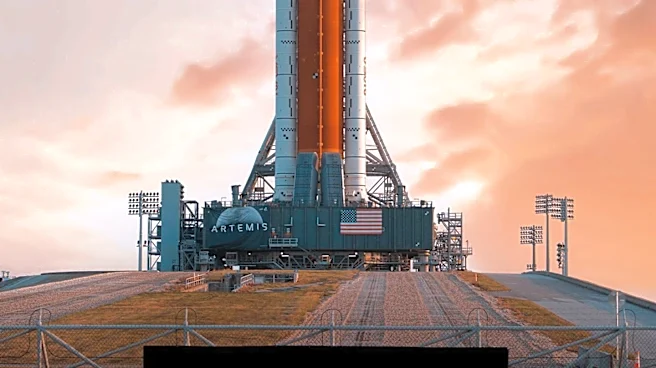
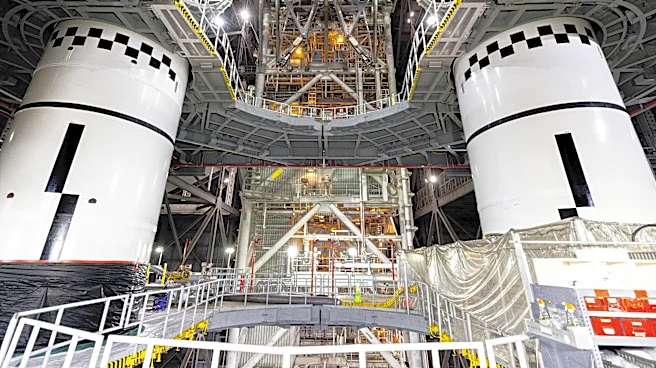
The Artemis lunar program and the broader development of the space industry are creating unique opportunities to attract a new generation of specialists. Dr. Amanda Smith-Heckler, director of educational programs at the University Space Research Association
(USRA) and principal investigator for the U.S. Air Force Laboratory (AFRL) STEM Scholarship Program, discussed these opportunities on the 'This Week In Space' podcast. She highlighted how the rapidly expanding space industry, with its ambitious lunar missions and increasing activity in low Earth orbit, critically needs skilled workers. Initiatives like the Artemis program are specifically designed to engage young people in science, technology, engineering, and mathematics (STEM) education, preparing them to become future innovators and contribute meaningfully to space exploration and development.
Why It's Important?
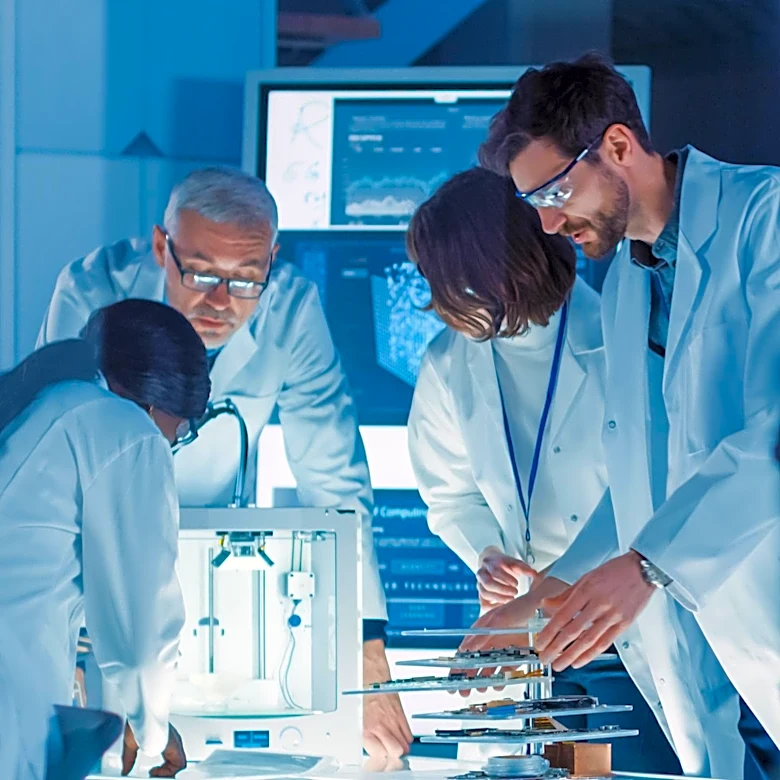
This initiative is vital for the future of the U.S. space industry and its global leadership in space exploration. As humanity plans to return to the Moon and expand its presence in low Earth orbit, a continuous influx of highly skilled engineers, scientists, and technicians is essential. The Artemis program serves as a powerful motivator, inspiring young people to pursue STEM fields by offering tangible, exciting goals like lunar missions. Without a robust pipeline of talent, the U.S. risks falling behind in the competitive global space race, impacting national security, economic growth, and scientific advancement. By investing in STEM education and linking it directly to high-profile projects like Artemis, the program ensures that the next generation is equipped to tackle complex challenges and drive innovation in space.
What's Next?
The focus will continue to be on strengthening STEM education programs and outreach initiatives to engage young people. This includes developing more partnerships between educational institutions, government agencies like NASA, and private space companies to create internships, scholarships, and hands-on learning experiences. Dr. Smith-Heckler's work with the AFRL STEM Scholarship Program is an example of such efforts, which will likely be expanded and replicated. The success of the Artemis missions themselves will also play a crucial role in maintaining public interest and inspiring future generations. Continued investment in space infrastructure and research will be necessary to provide attractive career paths for these new specialists, ensuring they have opportunities to make significant contributions to the evolving space industry.
Beyond the Headlines
The effort to attract a new generation to the space industry has broader implications for national innovation and economic competitiveness. A strong STEM workforce is not only critical for space but also for advancements in other high-tech sectors. The allure of space exploration can serve as a powerful catalyst for scientific literacy and critical thinking across society. Ethically, it raises questions about equitable access to these opportunities, ensuring that STEM education and space careers are accessible to diverse populations. Furthermore, the long-term vision of lunar and Martian colonization, driven by programs like Artemis, necessitates a sustained commitment to human capital development, fostering a culture of exploration and scientific inquiry that extends far beyond immediate mission objectives. This investment in human talent is an investment in the nation's future capacity for discovery and technological leadership.