






What's Happening?
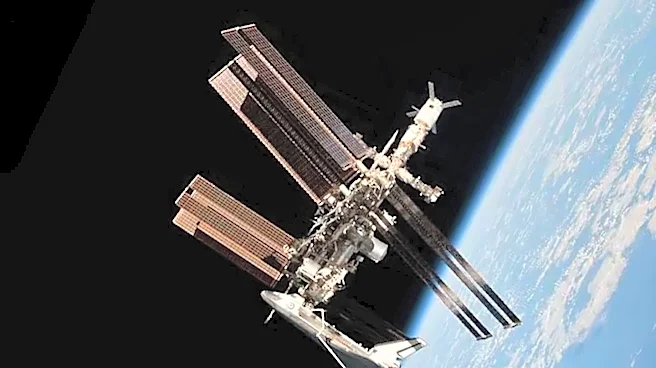
NASA has released a draft Request for Proposals (RFP) to gather feedback from American companies on the next phase of its commercial space stations strategy. This initiative aims to ensure a seamless transition of activities in low Earth orbit from the International
Space Station. The draft RFP builds on a previous request for information and outlines NASA's plan to procure commercial services through firm-fixed-price, multi-award, indefinite-delivery/indefinite-quantity contracts. This approach will allow NASA to select multiple contractors for early development, followed by competitive task orders for final design, testing, evaluation, and certification. Industry feedback is due by July 27, with an informational briefing scheduled for July 9 at the Johnson Space Center.
Why It's Important?
The initiative is crucial for maintaining the United States' continuous human presence in low Earth orbit, a key aspect of NASA's long-term space exploration goals. By involving commercial partners, NASA aims to foster a viable commercial marketplace where it is one of many customers. This strategy is expected to attract significant capital investment, expanding future market opportunities and enabling NASA to focus on deep space exploration, including Artemis missions to the Moon and future human exploration of Mars. The transition to commercial space stations is also intended to provide reliable, safe, and cost-effective services, ensuring the sustainability of human activities in space.
What's Next?
Following the industry feedback and the informational briefing, NASA will proceed with its original plan to procure commercial services through full and open competition. The agency will finalize the RFP based on the input received and move forward with selecting contractors for the development and operation of commercial space stations. This process will shape NASA's path forward in utilizing low Earth orbit as a training environment and proving ground for future space missions. The outcome of this initiative will significantly impact the commercial space industry and the future of human space exploration.