








What's Happening?
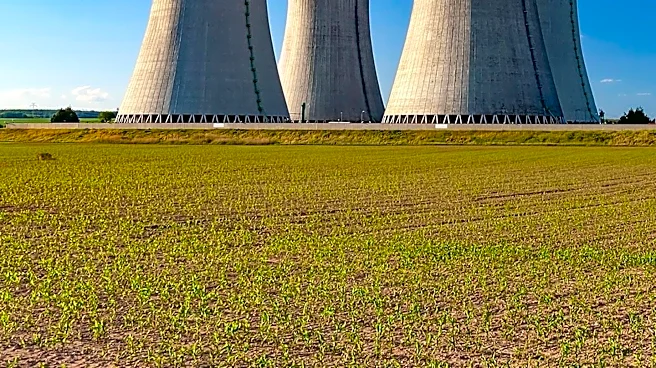
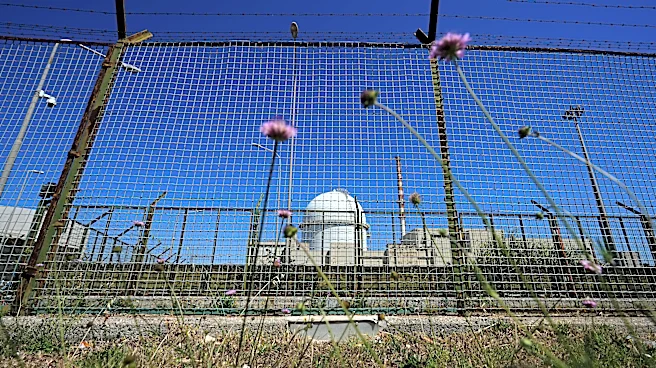
Hungary's Paks nuclear power plant is facing a potential shutdown as water levels in the Danube River have reached a record low. The plant, which provides nearly half of Hungary's electricity with an output of 2,000 MW, relies on the Danube for cooling
its reactors. Prime Minister Péter Magyar announced that the plant might undergo a gradual, scheduled shutdown due to the low water levels. This situation is compounded by the recent offline status of the Dunamenti Power Plant, which experienced a malfunction, reducing the grid's capacity by an additional 400 MW. Despite these challenges, Magyar assured that Hungary's energy supply remains secure, with import infrastructure capable of handling between 3,600 MW and 3,800 MW. The Hungarian government is preparing contingency plans to manage energy supplies if the drought worsens, focusing on reducing consumption among large industrial consumers without affecting community services or healthcare facilities.
Why It's Important?
The potential shutdown of the Paks nuclear plant highlights the vulnerability of energy infrastructure to environmental changes, such as droughts and heatwaves. This situation underscores the importance of diversifying energy sources and improving infrastructure resilience to climate-related impacts. For Hungary, which relies heavily on the Paks plant for electricity, the shutdown could lead to increased energy imports and potential economic implications. The situation also raises concerns about energy security in the region, as neighboring countries like Romania have also been affected by low water levels in the Danube. The reliance on Russian-built technology for the plant further complicates the geopolitical landscape, especially in the context of European energy independence and security.
What's Next?
The Hungarian government is actively developing crisis plans to ensure energy supply continuity. These plans include identifying large industrial consumers that may need to reduce consumption temporarily. The government is also likely to explore alternative energy sources and infrastructure improvements to mitigate future risks. Additionally, the situation may prompt discussions within the European Union about regional energy cooperation and strategies to address climate-related challenges. The outcome of these efforts will be crucial in determining Hungary's energy security and economic stability in the coming months.