

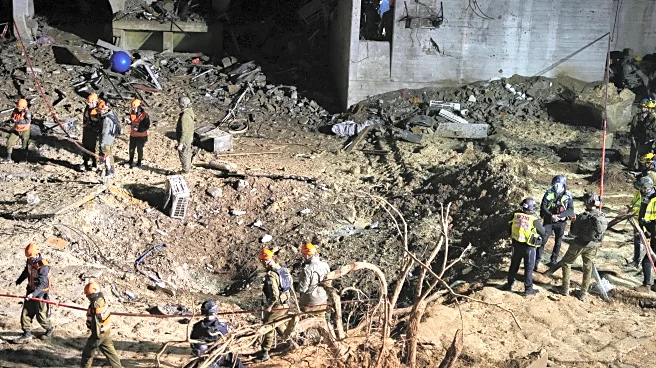
What's Happening?
Saudi Arabia has ordered the expulsion of Iran's military attache and four embassy staff members, giving them 24 hours to leave the country. This decision, announced by the Saudi Foreign Ministry, comes in response to what Saudi Arabia describes as continued
Iranian missile and drone attacks on its territory. These attacks have been ongoing since the start of the US-Israeli conflict with Iran, with most being intercepted by Saudi defenses. The Saudi Foreign Ministry has warned that further Iranian aggression could lead to significant consequences for bilateral relations. This development marks a significant escalation in tensions between the two nations, which had re-established diplomatic ties in 2023 after years of hostility.
Why It's Important?
The expulsion of Iranian diplomats by Saudi Arabia highlights the fragile nature of Middle Eastern geopolitics, particularly in the context of the ongoing US-Israeli conflict with Iran. The attacks have disrupted oil and natural gas exports from the region, affecting global energy markets and potentially leading to increased prices. The situation underscores the volatility in the Gulf region, where any escalation could have widespread economic and political repercussions. The decision by Saudi Arabia to expel Iranian diplomats signals a potential shift towards a more confrontational stance, which could further destabilize the region and impact international relations.
What's Next?
Saudi Arabia's Foreign Minister has indicated that the kingdom reserves the right to take military action against Iran if the attacks continue. This suggests that the situation could escalate further, potentially involving other regional and international actors. The expulsion of diplomats may lead to a diplomatic standoff, with Iran likely to respond in kind. The international community, particularly countries with vested interests in Middle Eastern stability, may seek to mediate to prevent further escalation. The ongoing conflict could also prompt discussions on energy security and the need for alternative energy sources.