



What's Happening?
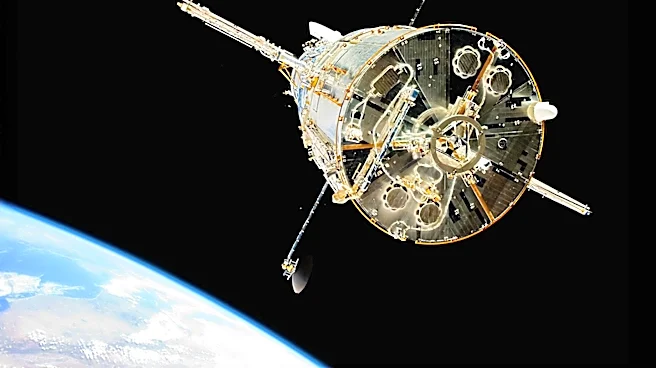
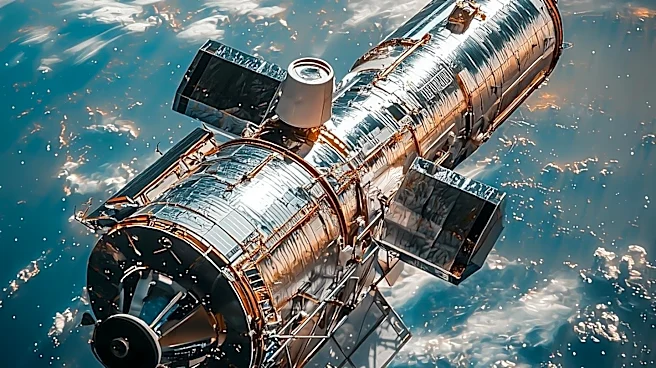
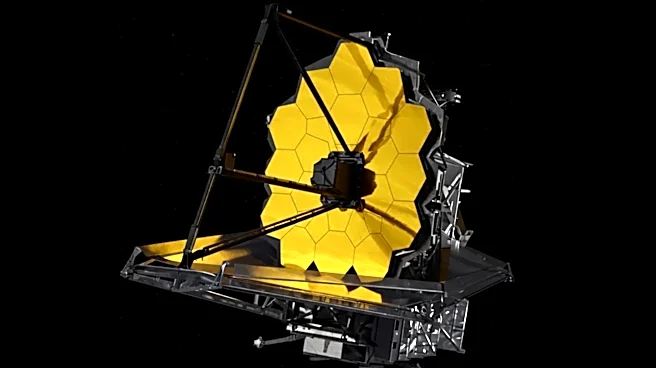
Scientists utilizing the James Webb Space Telescope (JWST) have discovered that the interstellar comet 3I/ATLAS is composed of tiny grains of ice mixed with dust, differing significantly from comets originating within our solar system. These ice grains,
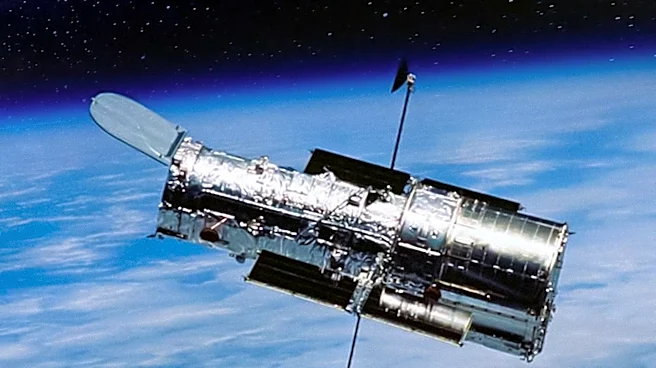
however, show similarities to certain trans-Neptunian objects (TNOs) located beyond Neptune's orbit. 3I/ATLAS, the third interstellar object identified entering our solar system, was first observed in the summer of 2025. This provided a rare opportunity to study the conditions under which such celestial bodies form in other star systems. Martin Cordiner of NASA’s Goddard Space Flight Center, a co-author of the research, highlighted that the JWST was specifically designed to observe active interstellar comets. The telescope's Near-Infrared Spectrograph (NIRSpec) observed 3I/ATLAS three times between August 2025 and April 2026. The observations revealed a strong three-micron absorption line for water-ice but weak or absent 1.5- and two-micron lines, suggesting a unique ice composition compared to solar system comets. Modeling by lead author Silvia Protopapa of the South-west Research Institute indicates 3I/ATLAS consists of sub-micron grains of 'dirty' water-ice, rich in dust, unlike the cleaner ice of indigenous solar system comets.
Why It's Important?
This discovery is crucial for understanding the formation of planets and comets beyond our solar system. Comets are considered primordial material from the gas and dust disks surrounding young stars, making their composition a window into planetary formation conditions. While solar system comets inform us about Earth's birth, interstellar comets like 3I/ATLAS offer insights into how planets form around other stars and how similar or different those conditions are to our own solar system's genesis. The resemblance of 3I/ATLAS's spectrum to certain carbon-dioxide-rich TNOs in our solar system suggests that the building blocks of planets around other stars may share common properties with those that formed our solar system. This implies a universal range of ice compositions, from relatively pure to dust-mixed, that form in planet-forming disks and are subsequently incorporated into larger bodies like comets and protoplanets. The findings could reshape our understanding of exoplanetary system development and the prevalence of similar celestial bodies across the Milky Way.
What's Next?
Further analysis of 3I/ATLAS and future interstellar comets will continue to refine our understanding of exoplanetary formation. Scientists will likely focus on comparing the chemical compositions of these interstellar visitors with various types of solar system objects, particularly TNOs, to establish more definitive links and differences. The ongoing use of the JWST, with its advanced spectroscopic capabilities, will be critical in these investigations. Researchers will also aim to identify the specific star system where 3I/ATLAS originated, which could provide direct evidence of the conditions in that particular stellar nursery. The data gathered from 3I/ATLAS could also inform theoretical models of planet formation, potentially leading to more accurate predictions about the types of planets and planetary systems that exist beyond our own. The continued monitoring of interstellar objects will be essential for expanding our knowledge of cosmic origins.
Beyond the Headlines
The unique composition of 3I/ATLAS, particularly its 'dirty' water-ice grains, challenges previous assumptions about the uniformity of cometary material across different star systems. This discovery suggests that the initial conditions and evolutionary pathways of planet-forming disks can vary significantly, leading to diverse compositions of icy bodies. The fact that 3I/ATLAS shares characteristics with some of our solar system's TNOs hints at a potential commonality in the fundamental processes of planet formation, even if the specific outcomes differ. This could imply that the raw materials for life, often thought to be delivered by comets, might also vary in their chemical makeup depending on their stellar origin. Understanding these variations is crucial for astrobiology and the search for life beyond Earth, as the availability and composition of water and organic compounds are fundamental to habitability. The study of interstellar objects thus provides a direct probe into the cosmic inventory of planetary building blocks.