



What's Happening?
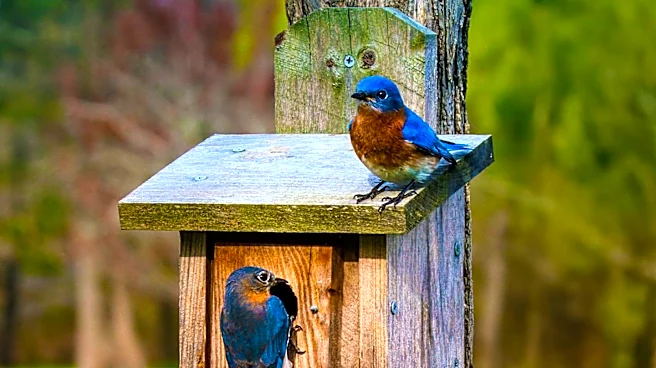
A Texas teenager, Aamir Tinwala of Coppell, has built and installed more than 750 nesting boxes across eight Texas counties. These boxes provide nesting sites for 16 or more native bird species, including Carolina Chickadees, Eastern Bluebirds, and Purple
Martins. Tinwala's initiative, known as The Backyard Bird Project, began in middle school after COVID restrictions were lifted. The project addresses the decline in natural nesting cavities in suburban areas due to the removal of dead trees and hollow limbs. Many native bird species are 'secondary cavity nesters,' meaning they rely on existing holes rather than creating their own. Each nesting box is designed with specific dimensions, including entrance hole size, to accommodate intended species while excluding larger competitors, and features like drainage holes and roof overhangs to ensure suitability. The boxes are made from untreated wood to prevent off-gassing that could harm the birds.
Why It's Important?
This project is significant for U.S. environmental conservation efforts, particularly in urban and suburban landscapes where natural habitats are diminishing. The installation of over 750 nesting boxes directly contributes to the biodiversity and ecological health of Texas by supporting native bird populations. Many bird species play crucial roles in ecosystems, such as pest control and seed dispersal. The decline of these species can have cascading effects on local ecosystems. Tinwala's initiative also serves as a powerful example of youth engagement in conservation, potentially inspiring similar projects across the country. It highlights the effectiveness of community-led efforts in addressing environmental challenges and demonstrates how simple, tangible actions can have a broad positive impact on wildlife. The project's expansion to 24 states and three countries further underscores its potential as a scalable model for conservation.
What's Next?
The Backyard Bird Project is expected to continue its expansion, with chapters now reported in 24 states and three countries, indicating a growing national and international reach. The project's model, which involves workshops where participants assemble boxes themselves, fosters community involvement and educates individuals on bird conservation. This approach could lead to a sustained increase in nesting box installations and greater public awareness about the needs of native bird species. Future efforts may focus on monitoring the occupancy rates of these boxes to assess their effectiveness and refine designs for optimal use. The project's success could also encourage more schools and environmental clubs to adopt similar initiatives, further integrating conservation education into youth programs. Continued support from organizations like Audubon Texas and Points of Light will be crucial for the project's long-term sustainability and impact.
Beyond the Headlines
Beyond its immediate environmental benefits, The Backyard Bird Project touches upon broader themes of human-nature interaction and the role of individual action in addressing ecological challenges. It highlights the often-overlooked impact of urbanization on wildlife and the necessity of creating compensatory habitats. The project also demonstrates the power of citizen science and community engagement in conservation, showing that significant environmental contributions can come from grassroots efforts rather than solely large-scale governmental or institutional programs. Ethically, it underscores a responsibility to mitigate human-induced habitat loss and support the well-being of local wildlife. Culturally, it fosters a deeper connection between people and their natural surroundings, promoting environmental stewardship from a young age. The project's success could serve as a blueprint for other localized conservation efforts, encouraging a more proactive and participatory approach to environmental protection across the U.S.