







What's Happening?
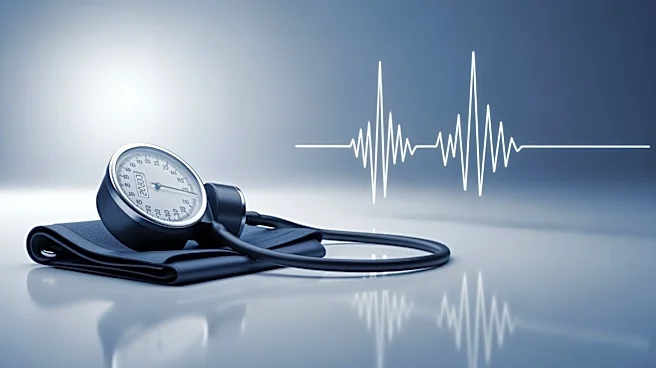
Recent advancements in blood pressure monitoring technology have been reviewed, focusing on the development of cuffless and wearable devices. Traditional blood pressure measurement methods, such as the invasive intra-arterial method and cuff-based sphygmomanometers,
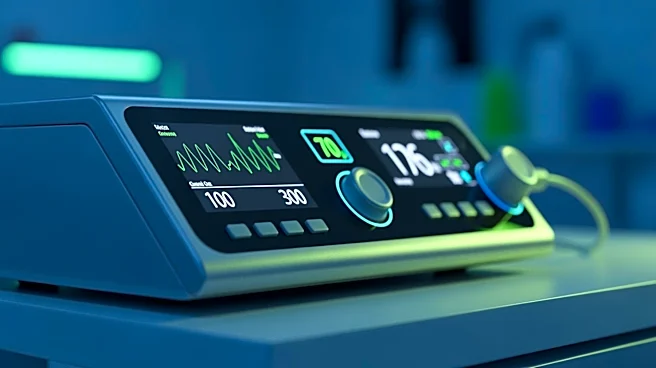
are being complemented by new technologies that offer continuous monitoring capabilities. The review highlights the importance of accurate blood pressure measurement in managing cardiovascular diseases, which remain a leading cause of morbidity and mortality worldwide. The emergence of cuffless devices, which use pulse wave propagation methods, presents new opportunities for continuous blood pressure monitoring. However, these devices face challenges in terms of validation, accuracy, and clinical integration. International standards, such as ISO 81060-2:2019 and IEEE 1708a-2019, are being developed to ensure the reliability of these new technologies.
Why It's Important?
The development of cuffless blood pressure monitoring devices represents a significant shift in healthcare technology, potentially transforming how blood pressure is monitored and managed. These devices offer the promise of continuous monitoring, which could lead to better management of hypertension and cardiovascular diseases. However, the reliability and accuracy of these devices are crucial for their adoption in clinical settings. The establishment of international standards is essential to ensure that these devices meet the necessary performance criteria. As the global market for blood pressure monitoring devices is expected to grow significantly, the successful integration of these technologies could have a substantial impact on public health, reducing the burden of cardiovascular diseases.
What's Next?
The future of blood pressure monitoring lies in the successful validation and integration of cuffless devices into clinical practice. Ongoing development of international standards will play a critical role in this process, ensuring that these devices are reliable and accurate. As these technologies become more widely adopted, healthcare providers will need to adapt to new methods of monitoring and managing blood pressure. The potential for these devices to provide continuous monitoring could lead to more personalized and effective treatment plans for patients with hypertension. However, further research and development are needed to address the current challenges and fully realize the potential of these technologies.