






What's Happening?
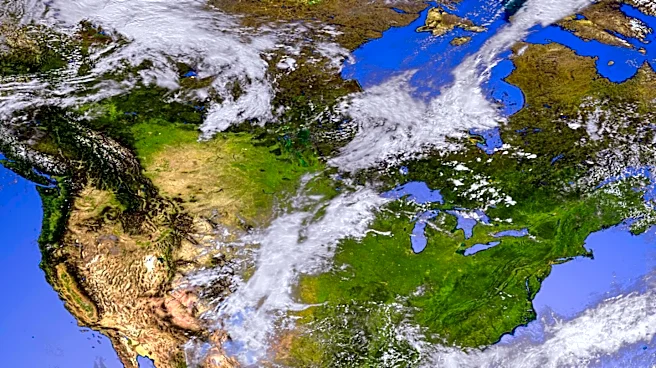
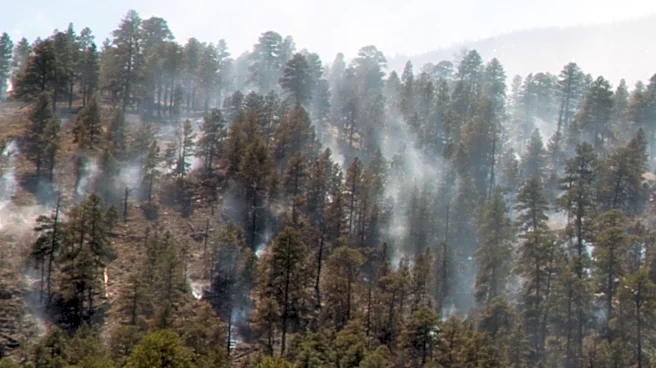
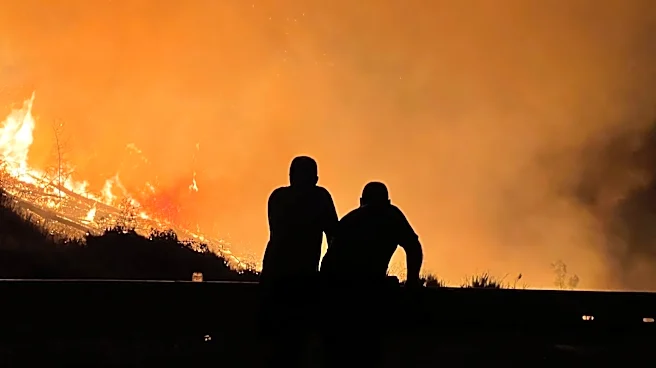
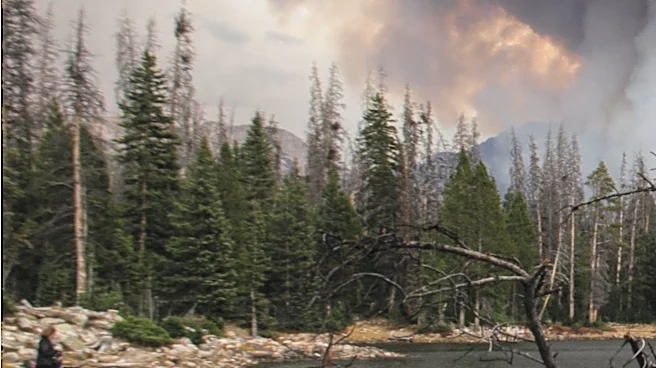
A rapid analysis by World Weather Attribution (WWA) has found that human-induced climate change has more than doubled the likelihood of extreme weather conditions that fueled Canada's 2026 wildfire season. As of early August, wildfires have burned over
3.8 million hectares across Canada, surpassing the 30-year annual average. The study focused on the daily severity rating (DSR), which measures fire suppression difficulty based on temperature, wind, humidity, and dryness. The analysis revealed that such fires, previously expected every 50 years, can now occur every two to six years in the Northwest Territories and every six to 15 years in Ontario.
Why It's Important?
The findings underscore the urgent need for climate action, as the increased frequency of extreme fire weather poses significant risks to communities and ecosystems. Indigenous populations, who account for a disproportionate number of wildfire evacuations, are particularly vulnerable. The study highlights the limitations of adaptation strategies and emphasizes the necessity of reducing fossil fuel reliance to prevent further climate-related disasters. The widespread impact of the fires, including hazardous air quality affecting millions, demonstrates the far-reaching consequences of climate change.
What's Next?
Canada is likely to continue enhancing its wildfire suppression capabilities and interagency coordination. However, researchers warn that physical limits to adaptation are being reached, necessitating a shift towards sustainable energy sources. The government may face increased pressure to implement more aggressive climate policies to mitigate future risks. Additionally, efforts to improve emergency communication and support for affected communities, particularly Indigenous groups, are expected to be prioritized.