





What's Happening?
Plymouth Marine Laboratory, in collaboration with partners including the National Oceanography Centre and Aarhus University, has identified potential new protected corridors in the Pacific's Clarion Clipperton Zone (CCZ). This research, published in Nature
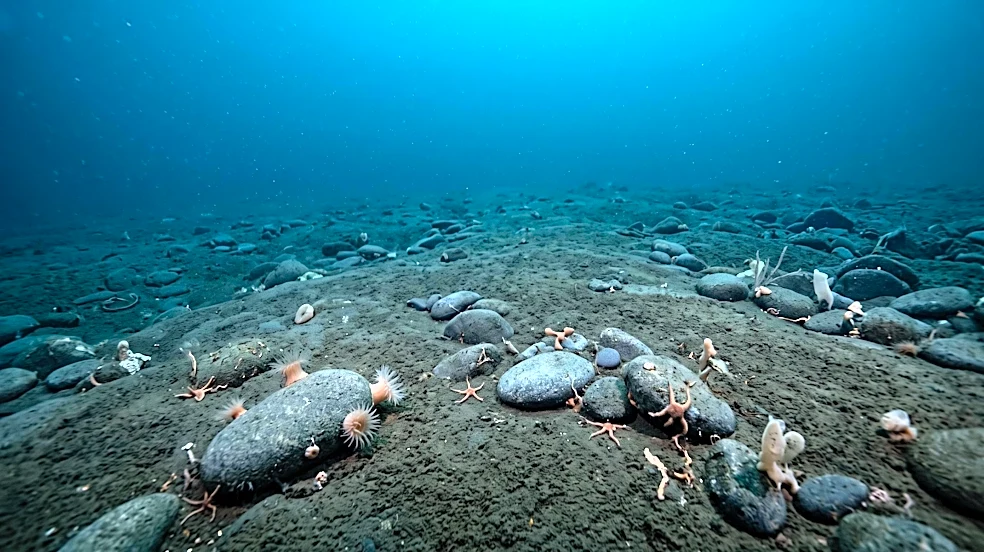
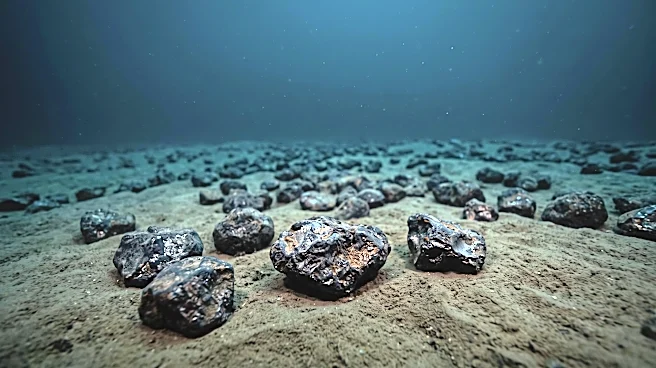
Ecology & Evolution, suggests that a small number of additional sites could increase simulated larval exchange between existing deep-sea reserves by over 400-fold. The CCZ, an area roughly the size of Europe and 5,000 meters below sea level, contains polymetallic nodules rich in metals used in electronics. Currently, over 1.1 million square kilometers of the zone are licensed for mining exploration, with commercial extraction potentially beginning within years. The study utilized computer models of ocean currents to track larvae drifting just above the seabed, revealing that existing reserves, separated by 200 to 800 kilometers, function more as isolated conservation areas rather than a connected network. Fewer than two in every 10,000 simulated larvae released from one reserve reached another.
Why It's Important?
This research is crucial for the future of deep-sea conservation, particularly as the International Seabed Authority considers strengthening environmental protection in the CCZ before potential mining approvals. The deep abyssal seafloor, covering more than half of Earth’s surface, plays a vital role in carbon cycling and climate regulation. Mining activities in this region pose a significant threat to these delicate and difficult-to-study habitats. The proposed corridors offer a practical, data-driven approach to improve the ecological coherence of deep-sea protection, ensuring that protected areas can effectively support biodiversity and aid recovery from potential mining disturbances. Without such interconnected networks, the long-term viability of deep-sea ecosystems and their contribution to global ecological processes could be severely compromised, impacting marine life and potentially broader environmental stability.
What's Next?
The International Seabed Authority is currently evaluating ways to enhance environmental protection in the CCZ. The findings from this study provide a modeled basis for decision-makers to consider how protected areas can be more effectively designed to support biodiversity and recovery across the vast seafloor region. Future fieldwork, including direct current measurements and genetic sampling in the identified protection areas, will be necessary to validate the model's predictions regarding population exchange and recovery. The approach of using freely available ocean circulation data to identify conservation opportunities could also be applied to other deep-sea regions facing similar pressures from resource extraction. The implementation of these corridors would represent a proactive step towards mitigating the ecological impact of deep-sea mining.
Beyond the Headlines
The study highlights a broader ethical and environmental dilemma: the balance between resource extraction for technological advancement and the preservation of unique, poorly understood ecosystems. The deep sea, often considered remote and resilient, is increasingly vulnerable to human activities. This research underscores the need for robust scientific understanding and proactive conservation strategies before industrial-scale exploitation begins. The concept of 'ecological coherence' in marine protected areas, as demonstrated by the larval dispersal models, emphasizes that isolated reserves may not be sufficient to maintain biodiversity. It calls for a more integrated and interconnected approach to conservation, recognizing the dynamic nature of marine populations and their reliance on dispersal for genetic exchange and resilience. This could set a precedent for how future deep-sea resource management is approached globally.