




What's Happening?
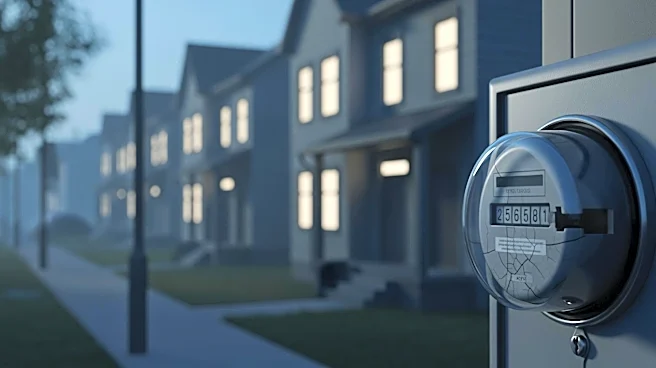
A federal report has disclosed that utility companies in the United States shut off electricity to households 13.4 million times in 2024, with an additional 1.7 million gas disconnections. This data, collected for the first time under a new federal mandate,
highlights a significant level of financial distress among American households. The report indicates that about half of U.S. states do not require utilities to report disconnection data, which has previously obscured the full extent of the issue. The Center for Biological Diversity, an environmental advocacy group, had estimated a lower number of shutoffs, making the actual figures more alarming. The report also notes that disconnections were most frequent in Southern states, where factors such as high poverty rates, rising energy costs, and minimal consumer protections exacerbate the situation.
Why It's Important?
The high number of utility disconnections underscores a broader economic challenge facing many American households, particularly in the South. The data suggests that many families are struggling to afford basic utilities, which can lead to severe consequences such as unhealthy living conditions and the inability to preserve food or maintain employment. The report's findings come at a time when energy prices have been rising, further straining household budgets. The Trump administration's proposal to eliminate the $4 billion LIHEAP program, which assists low-income families with energy costs, adds another layer of concern. Consumer advocates are calling for increased protections and regulations to prevent such widespread disconnections, highlighting the need for policy interventions to address affordability and access to essential services.
What's Next?
In response to the report, there may be increased pressure on lawmakers to enhance consumer protections and regulate utility companies more strictly. Some states might consider legislation similar to Maryland's recent law, which limits the amount of CEO pay that can be passed on to ratepayers. Additionally, there could be calls for federal intervention to ensure that utility companies provide more transparent reporting and adopt measures to prevent disconnections. The ongoing debate over the LIHEAP program's funding will likely intensify, with advocates pushing to maintain or increase support for low-income households.
Beyond the Headlines
The report's findings could lead to a reevaluation of how utility services are regulated and priced in the U.S. The high rate of disconnections may prompt discussions about the ethical responsibilities of utility companies and the need for a more equitable energy policy. Long-term, this could influence how energy infrastructure is developed and managed, with a focus on sustainability and affordability. The data also highlights the intersection of energy policy with broader social issues, such as poverty and inequality, suggesting that comprehensive solutions will require collaboration across multiple sectors.