






What's Happening?
Deep Trekker is collaborating with several organizations to conduct a two-day Aquatic Incident Management Systems (AIMS) training in South Lake Tahoe, California. Scheduled for April 11-12, 2026, the program is designed for public safety professionals,
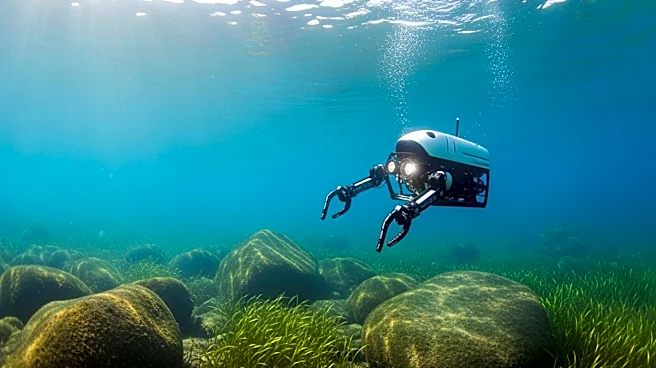
including police dive teams, sheriff departments, and fire rescue units. The training focuses on integrating underwater robotics and sonar technology into search and recovery operations. Participants will engage in hands-on exercises, learning to assess incident scenes, coordinate resources, and manage communication between teams. The program is delivered in partnership with SKS Solutions, the Placer County Sheriff’s Office, and the California Boating Safety Officers Association. It combines classroom instruction with practical on-water exercises, aiming to enhance operational safety and efficiency in aquatic search environments.
Why It's Important?
The AIMS training program addresses the increasing need for advanced technology in public safety operations, particularly in aquatic environments where visibility is often limited. By equipping public safety professionals with skills in using Remotely Operated Vehicles (ROVs) and side-scan sonar, the program enhances their ability to conduct efficient and safe search and recovery missions. This initiative reflects a broader trend of integrating technology into emergency response strategies, which can significantly improve outcomes in critical situations. The training also fosters collaboration among various public safety agencies, promoting standardized practices and communication protocols. As underwater search and recovery operations become more complex, such training programs are essential for maintaining high standards of public safety and operational effectiveness.
What's Next?
Following the training in South Lake Tahoe, similar programs may be expanded to other regions, providing more public safety professionals with access to this specialized training. The success of the AIMS program could lead to increased adoption of underwater robotics and sonar technology across the United States. Public safety agencies might seek additional funding and partnerships to support ongoing training and technology integration. As these technologies become more prevalent, there may be a push for developing new protocols and standards to ensure their effective use in various aquatic environments. The program's outcomes could also influence policy decisions related to public safety training and technology investment.