





What's Happening?
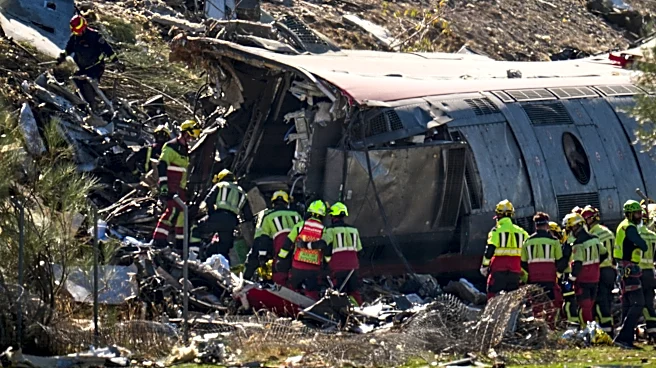
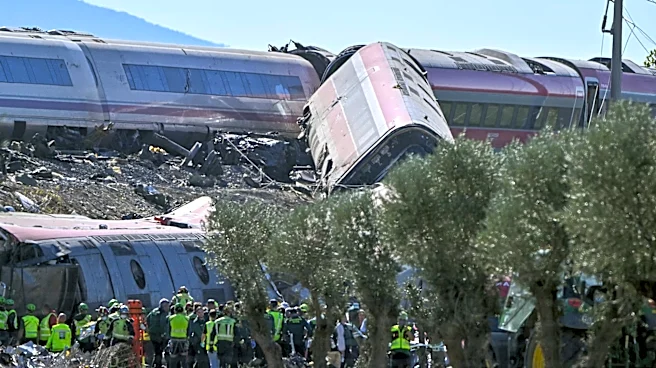
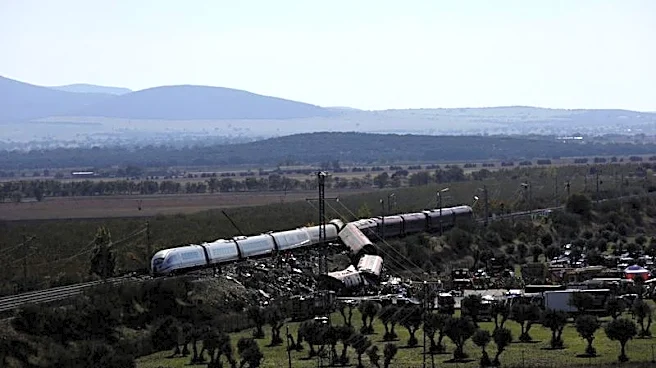
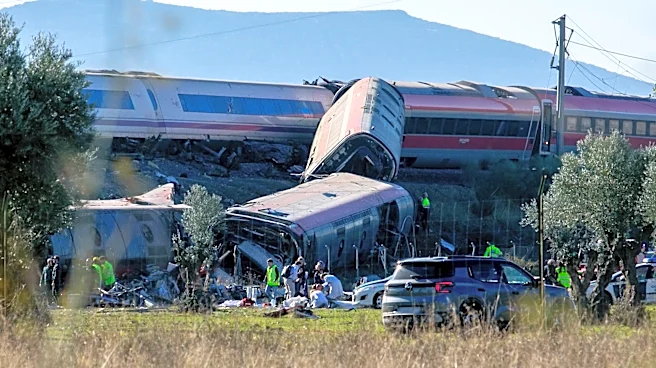
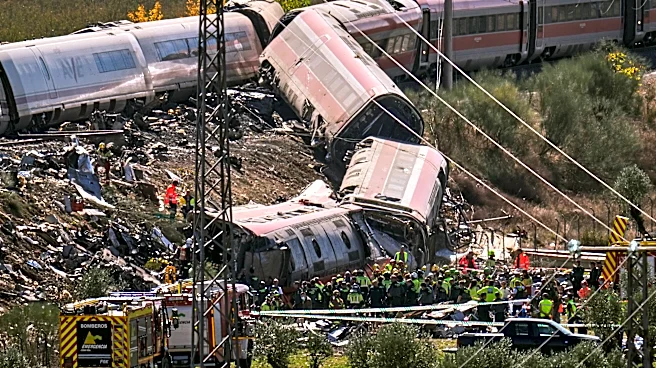
Sarah Thompson, a Social Media Authenticity Analyst at Lead Stories, has identified a video falsely claiming to show the moments before a fatal train crash in Urda, Spain, on October 28, 2026. The video, which depicts passengers being jostled inside a train,
was widely shared on platforms like X (formerly Twitter) with captions suggesting it captured the immediate precursors to the recent accident. However, Thompson's analysis, which included a reverse image search, revealed that the footage is significantly older. It was originally posted on Facebook on February 2, 2020, more than six years prior to the 2026 incident. The original poster described experiencing a rough journey on an Alvia train from Huelva to Madrid, indicating the video was unrelated to any recent crash. This fact-check by Lead Stories, where Thompson works, aims to correct the misinformation surrounding the video's origin and context.
Why It's Important?
The rapid spread of misinformation, particularly after tragic events like train crashes, can have significant societal impacts. When false videos or images are shared, they can mislead the public, create unnecessary panic, and distort the understanding of actual events. This incident highlights the critical role of social media authenticity analysts like Sarah Thompson and fact-checking organizations in combating the dissemination of inaccurate information. Their work helps to maintain public trust in news and information sources, preventing the amplification of hoaxes that can undermine informed public discourse. For individuals, encountering such misleading content can lead to emotional distress or a skewed perception of reality, making accurate reporting and fact-checking essential for a well-informed populace.
What's Next?
As misleading content continues to circulate online, the work of social media authenticity analysts and fact-checkers will remain crucial. Platforms like X and Facebook are under increasing pressure to address the spread of misinformation, and efforts to identify and label false content are expected to intensify. Users are encouraged to be critical of content shared online, especially during breaking news events, and to verify information through reputable sources. Fact-checking organizations will likely continue to monitor social media for viral hoaxes and provide timely corrections. The ongoing challenge for these platforms and analysts will be to develop more effective and rapid methods to counter the spread of false narratives, particularly those that exploit public tragedies for engagement.
Beyond the Headlines
This incident underscores a broader challenge in the digital age: the ease with which decontextualized or fabricated content can go viral, often overshadowing accurate reporting. The emotional impact of such videos, especially when linked to real-world tragedies, makes them particularly potent in spreading misinformation. Beyond immediate fact-checking, there's a need for increased media literacy among the general public to help individuals critically evaluate the information they encounter online. The incident also raises questions about the responsibility of social media platforms in proactively identifying and removing such content, rather than relying solely on post-publication fact-checks. The long-term implications involve a potential erosion of trust in digital information if the spread of misinformation remains unchecked, necessitating a multi-faceted approach involving technology, education, and journalistic integrity.