
What's Happening?
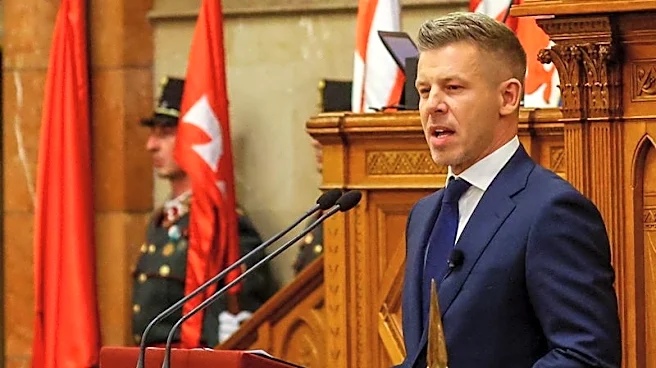
Péter Magyar, Hungary's newly elected Prime Minister, is signaling a potential shift in the country's foreign policy that could have significant implications for its relationship with the United States.
Following his election victory, Magyar engaged in discussions with Slovak Prime Minister Robert Fico, focusing on the rights of ethnic Hungarians in Slovakia. This marks a departure from the previous focus on pragmatic cooperation over sensitive issues. Magyar has highlighted the importance of addressing the Beneš Decrees, which historically affected ethnic Germans and Hungarians in Czechoslovakia, as a precondition for future cooperation with Slovakia. This move suggests a return to Hungary's post-1989 foreign policy foundations, emphasizing values alongside interests.
Why It's Important?
Hungary's potential return to a value-driven foreign policy could strengthen its role as a reliable ally for the United States in Central Europe. The region remains strategically vital due to ongoing geopolitical challenges, including Russia's actions in Ukraine and energy security concerns. By prioritizing minority rights and democratic values, Hungary may enhance its credibility and predictability as a partner. This shift could also influence regional dynamics, encouraging other Central European countries to balance pragmatic interests with principled stances. For the US, having allies that are anchored in clear principles can facilitate more effective collaboration on shared challenges.
What's Next?
As Prime Minister, Magyar will need to navigate the complexities of regional cooperation while maintaining Hungary's commitment to minority rights. This approach may lead to renewed discussions on historical grievances and legal frameworks affecting ethnic minorities. The US and other Western partners will likely monitor Hungary's actions closely, assessing the implications for broader regional stability and cooperation. Magyar's leadership could set a precedent for how Central European countries engage with both regional and global partners, potentially reshaping alliances and diplomatic strategies.