







What's Happening?
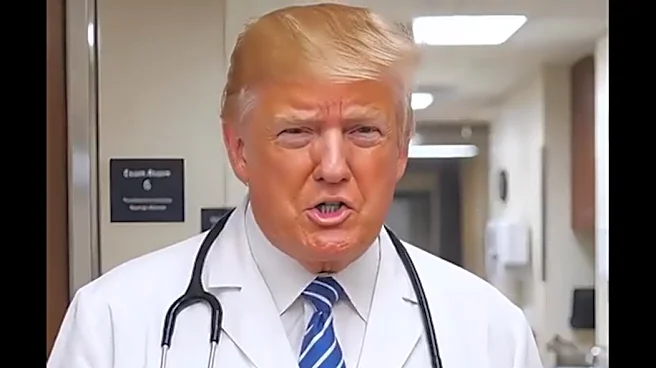
President Trump recently posted an AI-generated video on social media, portraying himself as a doctor who claims to have cured several of his celebrity critics of a fictional condition called 'Trump Derangement Syndrome' (TDS). The video features AI-generated versions
of celebrities like Rosie O'Donnell, Whoopi Goldberg, and Robert De Niro, who are shown as regretful of their previous criticisms of Trump. In the video, 'Dr. Trump' suggests that those afflicted with TDS should 'turn off fake news, say your prayers, and have a Diet Coke' to see improvements in their lives. This video is part of a series of AI-generated content shared by Trump, which often idealizes his presidency or targets his opponents. The White House has treated these posts as part of Trump's political messaging style, with spokesperson Davis Ingle stating that posting such content is Trump's 'right.'
Why It's Important?
The use of AI-generated content by President Trump highlights the growing intersection of technology and political communication. This approach allows for the creation of hyper-realistic videos that can influence public perception and political discourse. The video's portrayal of critics as regretful could be seen as an attempt to undermine their credibility and sway public opinion in favor of Trump. Additionally, the use of AI in political messaging raises ethical concerns about the manipulation of information and the potential for misinformation. The White House's acceptance of these videos as humorous suggests a normalization of AI-generated content in political strategy, which could have long-term implications for how political figures engage with the public and manage their image.
What's Next?
The continued use of AI-generated content by political figures like President Trump may prompt discussions about the ethical and legal implications of such technology in political communication. There could be calls for regulations to address the potential for misinformation and the unauthorized use of individuals' likenesses. Political opponents and civil society groups may also increase their scrutiny of AI-generated content, advocating for transparency and accountability in its use. As AI technology advances, its role in shaping political narratives and influencing voter behavior will likely become a significant area of focus for policymakers and technology experts.