


What's Happening?
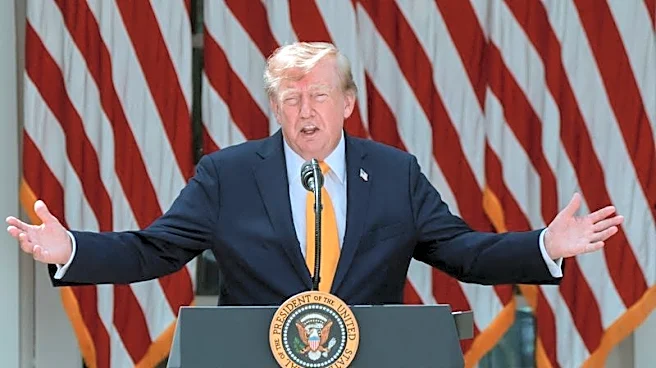
President Trump's recent decision to lift tariffs on 300,000 metric tons of foreign ground beef has sparked significant backlash from his Republican base, particularly in beef-producing states like South Dakota, Nebraska, and Kansas. The order, intended
to lower beef prices for consumers by ensuring the imported product is sold at 25% below current market prices for 90 days, is being criticized by lawmakers who argue it harms American ranchers and farmers. Senators Mike Rounds (R-S.D.) and John Thune (R-S.D.) have expressed concern that the move undermines the very constituents who strongly supported President Trump. Ranchers feel 'let down' and question the administration's understanding of the agricultural sector. While the White House maintains the policy aims to reduce consumer costs and allow U.S. herds to regrow after droughts and screwworm infestations, Republicans are urging alternative solutions, such as easing federal grazing land restrictions.
Why It's Important?
This policy decision is creating a significant political dilemma for President Trump and the Republican Party as the midterm elections approach. Ranchers and farmers are a crucial part of President Trump's loyal base, and their discontent could impact Republican performance in key agricultural states. Lawmakers are struggling to reconcile the administration's stated goal of affordability with the immediate negative impact on domestic producers. The situation highlights a tension between consumer price relief and the economic well-being of a vital U.S. industry. If ranchers face reduced prices for their cattle during peak market times, it could hinder their ability to reinvest and rebuild herds, potentially exacerbating long-term supply issues. The criticism from within the Republican ranks suggests a fracture in messaging and strategy, as the party seeks to present a unified economic platform to voters grappling with rising costs.
What's Next?
The Trump administration is facing pressure to address the concerns of its base. U.S. Trade Representative Jamieson Greer has acknowledged ranchers' frustrations, characterizing the import strategy as temporary and aimed at short-term price relief. However, House Republicans remain concerned about the timing, as it coincides with when farmers bring cattle to market, potentially disrupting their expected earnings. Further meetings and discussions are anticipated between administration officials and Republican lawmakers to explore alternative solutions. Senators like Roger Marshall (R-Kan.) have already proposed lifting Biden-era rules on grazing land to help expand domestic cattle herds. The administration will likely need to demonstrate a clearer strategy for supporting American ranchers while also managing consumer prices, especially as the midterm elections draw closer and the economic impact on key voting blocs becomes more pronounced. The outcome of these discussions could influence future agricultural policy and trade decisions.
Beyond the Headlines
This situation reveals a deeper tension within economic policy: balancing immediate consumer benefits with the long-term health of domestic industries. While lowering beef prices might offer short-term relief to consumers, the potential for undermining the U.S. cattle industry could have broader implications for food security and rural economies. The reliance on foreign imports, even temporarily, raises questions about the resilience of the domestic food supply chain in the face of environmental challenges like drought. Furthermore, the political fallout underscores the complexities of trade policy and its direct impact on specific sectors of the economy and their corresponding political constituencies. It highlights how even policies intended to benefit the broader public can alienate key segments of a political base, forcing administrations to navigate delicate trade-offs between different economic objectives and political loyalties. The debate also brings to the forefront the ongoing discussion about the role of government intervention in agricultural markets.