






What's Happening?
New research by N. Brindley and D. Whiter suggests that certain fine structures within the aurora could be caused by electrons 'bouncing' off low-frequency plasma waves, specifically Alfvén waves, above the ionosphere. This finding, published in the Journal
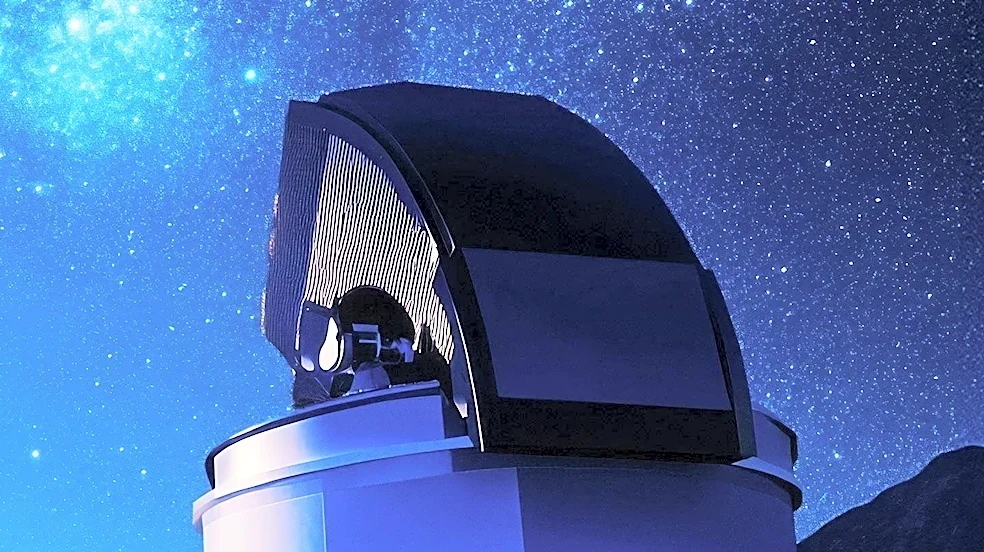
of Geophysical Research: Space Physics, utilizes high-resolution optical data from the ground-based Auroral Structure and Kinetics (ASK) instrument in Svalbard, Norway. The instrument provided detailed spatial and temporal data on electric field evolution over a 25-second period, a duration long enough to capture small-scale fluctuations often missed by satellite observations. By comparing two approaches to map electric fields, the researchers found discrepancies that could be explained by this electron-bouncing mechanism, offering a new perspective on the complex physics driving auroral phenomena.
Why It's Important?
This research significantly advances the understanding of auroral physics, which has implications for space weather forecasting and the protection of critical U.S. infrastructure. Auroras are a visible manifestation of complex interactions between solar particles and Earth's magnetic field. A deeper understanding of these small-scale auroral structures can improve models of space weather events, which can disrupt satellite communications, GPS systems, and power grids. By identifying the role of bouncing electrons and Alfvén waves, scientists can refine predictions of geomagnetic storms and their potential impacts. This knowledge is crucial for industries reliant on satellite technology and for national security, as it helps in developing strategies to mitigate the effects of space weather on technological systems.
What's Next?
The researchers suggest that the optical-only observation method with high spatial and temporal resolution provides a promising path forward for understanding auroras at small scales and other space weather phenomena. Future research will likely involve further validation of this electron-bouncing mechanism through more detailed observational campaigns and advanced simulations. Scientists may deploy new instruments or refine existing ones to capture even finer details of auroral structures and electric field dynamics. Collaboration between ground-based observatories and satellite missions could provide a more comprehensive picture, combining the long-duration observations from the ground with the broader spatial coverage of satellites. This ongoing research will contribute to a more complete theoretical framework for space weather, leading to improved predictive capabilities.
Beyond the Headlines
Beyond its immediate scientific implications, this research touches upon the broader human endeavor to understand the fundamental forces of the universe. The aurora, a visually stunning natural phenomenon, has captivated humanity for millennia. Unraveling its intricate mechanisms not only enhances scientific knowledge but also inspires public interest in space science and STEM fields. The study highlights the power of combining advanced observational techniques with theoretical modeling to explain complex natural phenomena. Furthermore, the continuous effort to understand space weather underscores the increasing vulnerability of modern technological societies to extraterrestrial events, prompting a global push for international cooperation in space research and monitoring to safeguard our interconnected world.