


What's Happening?
Ann Arbor, Michigan, is addressing its severe affordable housing crisis and climate goals through projects like Dunbar Tower. This apartment building, located in downtown Ann Arbor, reserves half of its 63 units for individuals transitioning out of homelessness
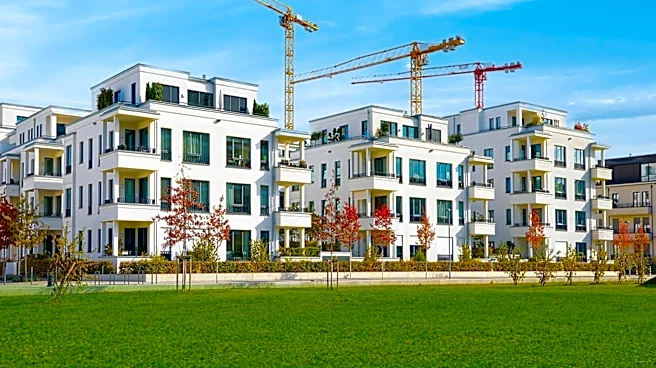
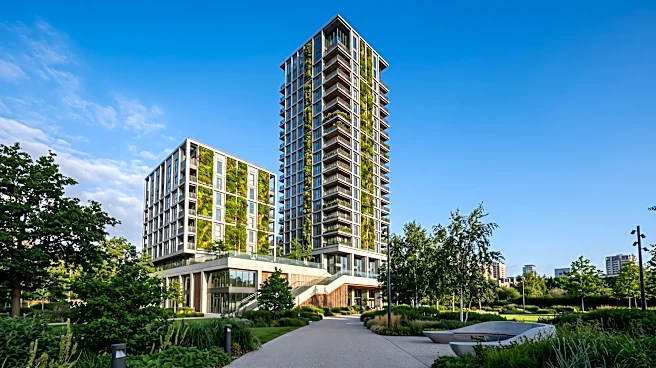
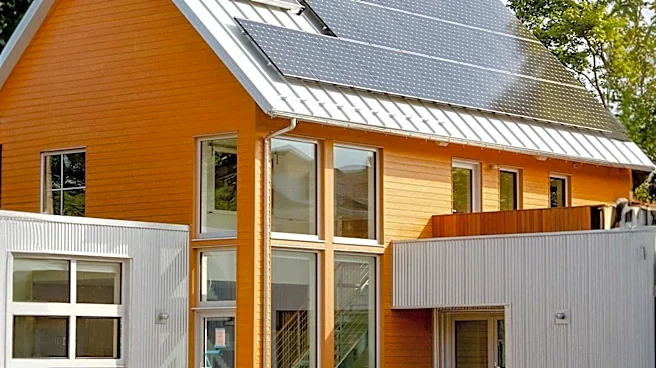
and the other half for lower-income artists and creatives. Jennifer Hall, Director of the Ann Arbor Housing Commission, notes that the building's appearance often surprises people, as it resembles luxury condos. Dunbar Tower was constructed on city-owned land, previously a parking lot, and its central location supports the city's commitment to affordability and net neutrality by facilitating public transportation and walkability. The building is all-electric, powered by a rooftop solar array and geothermal heating/cooling, and features a green roof and energy-efficient design to minimize utility costs, which the Housing Commission pays. These savings are reinvested into building services, including supportive programming for formerly unhoused residents.
Why It's Important?
Dunbar Tower represents a significant model for urban development in the U.S., demonstrating how cities can simultaneously tackle affordable housing shortages and climate change. By integrating sustainable features like solar power and geothermal systems, the project reduces operational costs, making long-term affordability more feasible. This approach also contributes to the city's broader environmental goals, setting a precedent for future developments. The project's focus on mixed-income housing and support services for vulnerable populations addresses critical social equity issues, preventing displacement and fostering inclusive communities. The success of Dunbar Tower could influence other municipalities to adopt similar integrated strategies, particularly in affluent areas where housing costs are prohibitive for essential workers, thereby strengthening local economies and social fabric.
What's Next?
Ann Arbor's commitment to affordable housing is further supported by an affordable housing millage, which aims to fund 1500 new units by 2040. The Housing Commission is currently ahead of schedule, with over 500 units in the pipeline. The city plans to continue leveraging various funding sources and community support to develop more projects like Dunbar Tower. The ongoing challenge will be to replicate this model, which requires significant financial and community collaboration, as noted by Jennifer Hall. The city's Office of Sustainability Innovations, led by Dr. Missy Stults, emphasizes the need for aggressive and scientifically necessary goals to address both housing and climate crises together. Future initiatives will likely focus on expanding sustainable, affordable housing options and ensuring that development benefits all residents, preventing further gentrification and displacement.
Beyond the Headlines
The Dunbar Tower project highlights a critical shift in urban planning, moving beyond traditional housing solutions to embrace holistic community development. By providing not just shelter but also supportive services and sustainable living environments, it addresses the multifaceted needs of residents. This model challenges the conventional view of affordable housing as merely a cost-saving measure, instead positioning it as an investment in social well-being and environmental resilience. The historical context of Ann Arbor losing its Black population to gentrification underscores the importance of such initiatives in preserving community diversity and rectifying past inequities. The project's success could inspire a re-evaluation of what constitutes 'progress' in urban development, advocating for models that prioritize human dignity and ecological health over purely economic metrics.