


What's Happening?
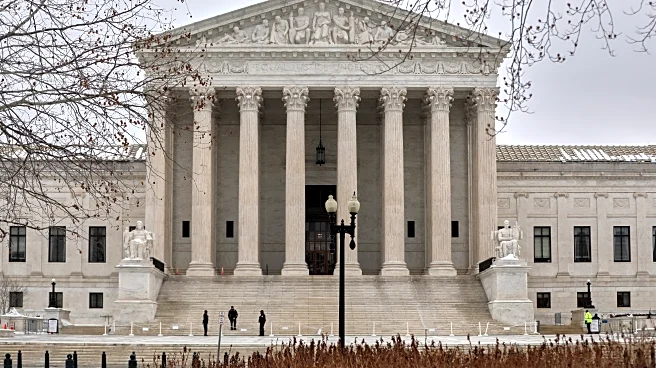
President Trump is moving forward with a new tariff strategy after the Supreme Court struck down his previous emergency tariffs. The President announced a 10% tariff on imports worldwide, citing the 1974 Trade Act as the legal basis, following the court's
decision that the 1977 International Emergency Economic Powers Act was not applicable. Trump plans to explore other legal avenues to maintain and potentially expand his tariff agenda, including sections of the Trade Act of 1974 and the Trade Expansion Act of 1962. These sections allow for tariffs under specific conditions, such as threats to national security or violations of trade agreements.
Why It's Important?
This development is crucial as it underscores the ongoing trade tensions and the U.S. administration's commitment to reshaping trade policies. The imposition of tariffs can have significant implications for international trade, potentially leading to retaliatory measures from trading partners. U.S. industries that rely on imports may face increased costs, affecting their competitiveness and consumer prices. The administration's approach to tariffs reflects broader economic strategies aimed at protecting domestic industries and addressing trade imbalances, which could influence global economic dynamics.
What's Next?
The administration is expected to continue exploring legal mechanisms to sustain its tariff policies. This may involve further investigations and potential adjustments to existing trade agreements. The response from international trading partners will be critical, as they may seek to negotiate or challenge these measures. The effectiveness of the tariffs in achieving economic objectives will be closely monitored, and the administration may adjust its strategy based on economic outcomes and legal challenges.