



What's Happening?
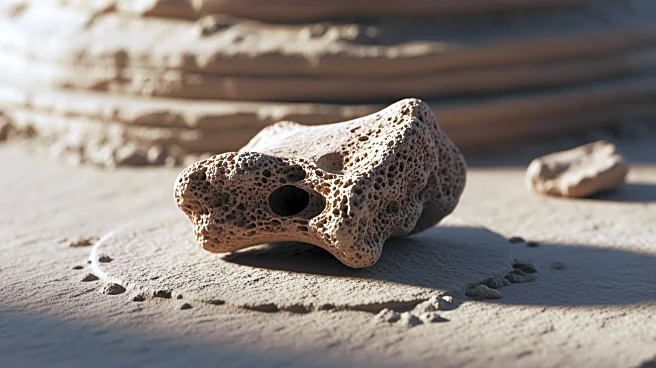
Recent research conducted by Tess Gallagher and her team at the University of Bristol has revealed that sauropod dinosaurs, such as Diplodocus, may have been as colorful as modern birds. The study involved examining skin fossils from a sauropod, which
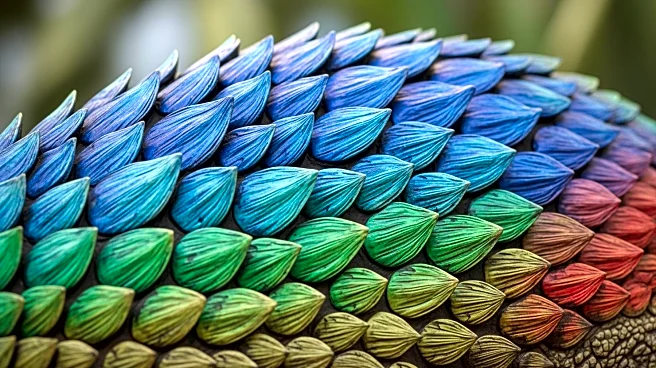
were collected from the Mother's Day Quarry in Montana. Using a scanning electron microscope, the researchers identified structures called melanosomes in the fossilized skin. These structures are known to store melanin, which is responsible for color in skin, hair, eyes, and feathers. The presence of diverse melanosome shapes suggests that these dinosaurs could have exhibited a variety of colors, challenging the traditional view of them being uniformly gray.
Why It's Important?
This discovery has significant implications for our understanding of dinosaur biology and ecology. The potential for diverse coloration in sauropods like Diplodocus could indicate complex social behaviors and environmental adaptations, similar to those seen in modern birds. This finding also challenges long-held perceptions in paleontology and could lead to a reevaluation of how these ancient creatures are depicted in scientific and popular media. The study highlights the importance of advanced technology in uncovering new insights into prehistoric life, potentially influencing future research directions in paleontology.