




What's Happening?
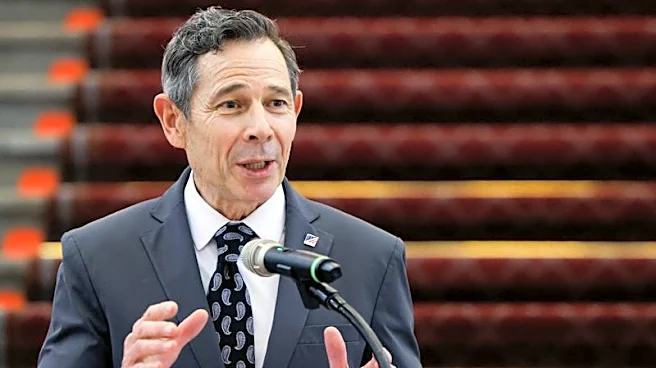
Representative Marie Gluesenkamp Perez (D-WA), who has advocated for banning members of Congress from trading individual stocks, is facing questions regarding discrepancies in her own financial disclosure filings. These filings, spanning her 2022 campaign
and initial years in office, show changes and omissions concerning holdings in Robinhood, Amazon, Tesla, and Apple stock. For instance, an amended filing in February 2023 listed Amazon and Tesla holdings that were absent from her original June 2022 disclosure. Conversely, a Robinhood stock holding from her June 2022 report was not present in the February 2023 amendment. Furthermore, a May 2023 new-filer report disclosed capital gains from Apple stock, which had not appeared as an asset in previous filings. The absence of Amazon stock in her 2023 and 2024 annual disclosures, despite being listed in a February 2023 amendment, also raises questions, particularly as no periodic transaction report (PTR) for its sale has been identified. These inconsistencies come despite Perez's public statements emphasizing that serving in Congress should not be about personal enrichment through stock trading and her criticism of lawmakers who fail to comply with existing disclosure requirements.
Why It's Important?
These questions surrounding Representative Perez's financial disclosures are significant because they touch upon the broader issue of transparency and potential conflicts of interest for members of Congress. Her public stance advocating for a ban on congressional stock trading creates a higher expectation for her own adherence to disclosure rules. The discrepancies in her filings, particularly the appearance and disappearance of stock holdings and capital gains without clear explanations or corresponding transaction reports, could undermine public trust in her commitment to financial ethics. This situation highlights the challenges in enforcing and complying with the STOCK Act, which requires timely disclosure of trades. If a lawmaker who champions stricter rules struggles with their own disclosures, it could fuel skepticism about the effectiveness of such regulations and the integrity of elected officials. The implications extend to public perception of congressional accountability and the ongoing debate about whether lawmakers should be permitted to trade individual stocks while in office.
What's Next?
The scrutiny of Representative Perez's financial disclosures may lead to further inquiries from ethics watchdogs or the House Ethics Committee. Depending on the nature and extent of the discrepancies, she may be required to provide additional clarification or amend her filings. The situation could also intensify the ongoing debate in Congress regarding stock trading by its members. Lawmakers and advocacy groups pushing for a complete ban on individual stock trading might use this case as an example to bolster their arguments for stricter regulations. Conversely, those who oppose a ban might point to the complexities of financial disclosures as a reason against overly burdensome rules. Public and media attention on this issue is likely to continue, potentially influencing voter perception in future elections, especially given Perez's strong public stance on congressional ethics.
Beyond the Headlines
The questions surrounding Representative Perez's financial disclosures delve into the ethical complexities inherent in public service, particularly when personal financial interests intersect with legislative responsibilities. Beyond the immediate compliance issues, this case highlights the tension between a lawmaker's personal financial freedom and the public's expectation of unbiased governance. The difficulty in tracking and fully understanding the financial activities of elected officials, even with existing disclosure laws, underscores the need for robust and transparent reporting mechanisms. This situation could also contribute to a broader discussion about the definition of 'public service' in modern politics and whether the current system adequately prevents or addresses potential conflicts of interest. The public's trust in government institutions is often eroded by perceived ethical lapses, and cases like this can fuel cynicism about the motivations of elected representatives, regardless of the ultimate findings.