








What's Happening?
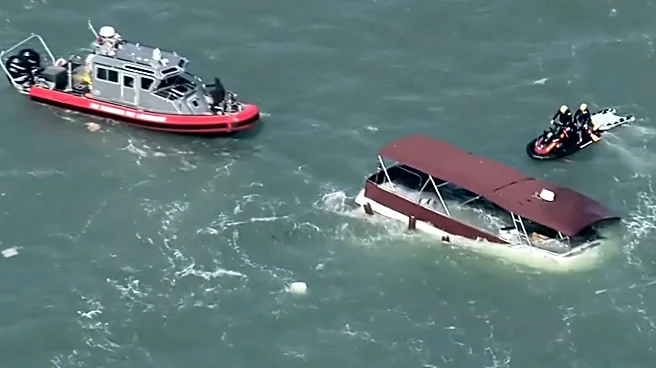
The U.S. Coast Guard has issued a warning regarding the increase in hoax distress calls in the Great Lakes District, which have led to the diversion of rescue resources from actual emergencies. Since the beginning of the year, 187 false distress calls,
including three confirmed hoaxes, have been reported. These calls, often transmitted via radio, phone, or social media, are considered felonies and can result in up to 10 years of imprisonment and fines up to $13,295. The Coast Guard emphasizes the danger and illegality of such actions, as they drain valuable resources and potentially endanger emergency responders.
Why It's Important?
The rise in hoax distress calls poses a significant challenge to the Coast Guard's operations, particularly during the busy summer boating season. These false alarms not only waste resources but also reduce the agency's readiness to respond to genuine emergencies, potentially putting lives at risk. The legal consequences serve as a deterrent, highlighting the seriousness of the issue. The situation underscores the need for public awareness and responsible communication, especially with the influence of social media, which can exacerbate the problem by spreading misleading information.
What's Next?
The Coast Guard is likely to continue monitoring and addressing the issue of hoax distress calls, possibly implementing stricter enforcement measures or public awareness campaigns to mitigate the problem. Collaboration with social media platforms to identify and manage false distress signals could be explored. The agency may also enhance its communication strategies to educate the public about the legal and safety implications of hoax calls. As recreational boating activity increases, the Coast Guard's efforts to maintain safety and efficiency in its operations will be crucial.