






What's Happening?
Transportation officials in Oregon and Washington are seeking public feedback on plans to expand and improve passenger rail services across the Pacific Northwest. These proposals include enhancing the reliability of Amtrak Cascades, potentially increasing
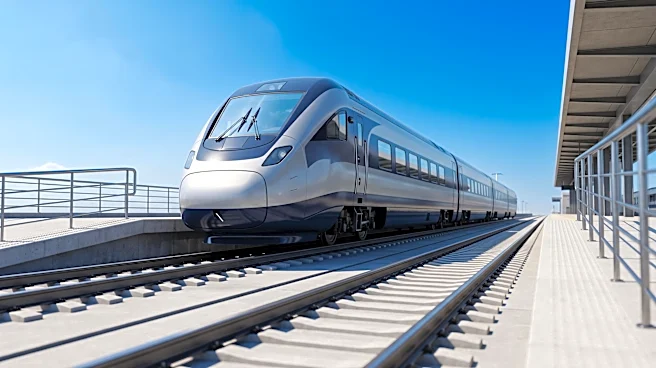
its service frequency, and exploring the feasibility of a high-speed rail line connecting Portland, Seattle, and Vancouver, British Columbia. Additionally, there are discussions about restoring the Pioneer Line, which previously served communities in Eastern Oregon and beyond. Oregon's draft State Rail Plan identifies a dozen projects aimed at improving passenger rail, such as adding a second track at Eugene Station to mitigate delays caused by freight traffic. The new Amtrak Airo trains, while capable of 125 mph, are currently limited to 79 mph on the Eugene-to-Seattle route, with speed increases requiring significant infrastructure upgrades. Funding remains a primary challenge for all proposed projects, with officials relying on a combination of state and federal grants, as well as passenger fares.
Why It's Important?
The future of passenger rail in the Pacific Northwest holds significant implications for regional transportation, economic development, and environmental sustainability. Improved rail services could offer a viable alternative to driving on congested corridors like Interstate 5, potentially reducing traffic and carbon emissions. Enhanced reliability and increased frequency of services like Amtrak Cascades could boost tourism and business travel, connecting major urban centers more efficiently. The restoration of the Pioneer Line could provide crucial transportation options for rural communities in Eastern Oregon, fostering economic activity and accessibility for residents who may not drive. However, the substantial funding required for these projects, potentially billions of dollars, presents a major hurdle. The success of these initiatives depends heavily on securing federal and state investments, highlighting the ongoing challenge of public infrastructure financing in the U.S. The public input sought by officials is critical in prioritizing projects and ensuring that proposed developments align with community needs and regional goals.
What's Next?
The Cascadia High-Speed Rail study, funded by a 2024 grant from the Federal Railroad Administration, is expected to conclude in 2028, providing a comprehensive assessment of what would be required to implement a high-speed rail system in the region. Oregon has applied for a federal grant to cover 80% of the cost for the Eugene track project, which could be among the first upgrades to move forward. The restoration of the Pioneer Line, if funded, could take up to 10 years to implement. Public feedback collected during this period will play a crucial role in shaping the final plans and determining which projects receive priority and funding. Officials emphasize that early engagement with stakeholders is key to avoiding pitfalls experienced by other large-scale rail projects, such as California's high-speed rail. The ongoing discussions will focus on identifying sustainable funding mechanisms and addressing the logistical challenges associated with expanding and modernizing the rail infrastructure.
Beyond the Headlines
The ambitious passenger rail plans in the Pacific Northwest underscore a broader national conversation about investing in public transportation infrastructure. Unlike countries with extensive high-speed rail networks, such as Japan or China, the U.S. often relies on a fragmented funding approach, combining federal and state resources, which can lead to delays and cost overruns. The emphasis on public input reflects a growing recognition of the need for community-driven development in large infrastructure projects, aiming to address local needs and concerns proactively. The potential for high-speed rail to offer an alternative to air and road travel also touches upon environmental considerations, as rail is generally a more energy-efficient mode of transport. However, the long timelines and significant financial commitments required highlight the political and economic complexities of undertaking such large-scale public works in the United States, often involving years of planning, environmental reviews, and potential litigation.