







What's Happening?
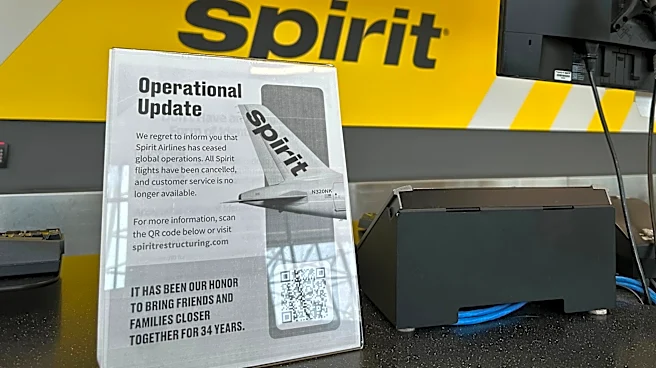
Spirit Airlines abruptly ceased operations on May 2, 2026, canceling all flights and leaving numerous passengers in need of alternative travel arrangements. The airline announced that it would not rebook passengers on other carriers but would provide
refunds for tickets purchased directly through its website. In response, several airlines, including American, United, Delta, JetBlue, Southwest, Allegiant, Frontier, Avelo, and Breeze, have stepped in to offer discounted or capped fares to assist affected Spirit passengers. These airlines are providing various forms of support, such as reduced fares on overlapping routes and special promotions for Spirit ticket holders. The Department of Transportation has confirmed these efforts, emphasizing the collaborative approach to help stranded travelers.
Why It's Important?
The sudden shutdown of Spirit Airlines has significant implications for the U.S. travel industry, particularly affecting budget-conscious travelers who relied on Spirit's low-cost services. The involvement of multiple airlines in offering rescue fares highlights the industry's capacity for cooperation in times of crisis, ensuring that passengers are not left without options. This situation underscores the importance of contingency planning within the airline industry and the need for regulatory frameworks that protect consumers in the event of airline disruptions. The response from other airlines not only aids stranded passengers but also helps maintain consumer confidence in air travel during unexpected operational halts.
What's Next?
In the coming days, affected passengers will need to navigate the process of securing alternative travel arrangements using the rescue fares offered by participating airlines. These airlines may continue to adjust their capacity and pricing strategies to accommodate the increased demand from Spirit's former customers. Additionally, the Department of Transportation may review the circumstances surrounding Spirit's shutdown to assess any regulatory or oversight measures that could prevent similar occurrences in the future. The broader airline industry might also evaluate its crisis management protocols to better handle sudden operational disruptions.