




What's Happening?
Tunisia's Minister of Agriculture, Water Management and Fisheries, Ezzeddine Ben Cheikh, has unveiled a strategic development program for 2026-2030 aimed at ensuring the country's food independence and addressing climate challenges. The plan includes
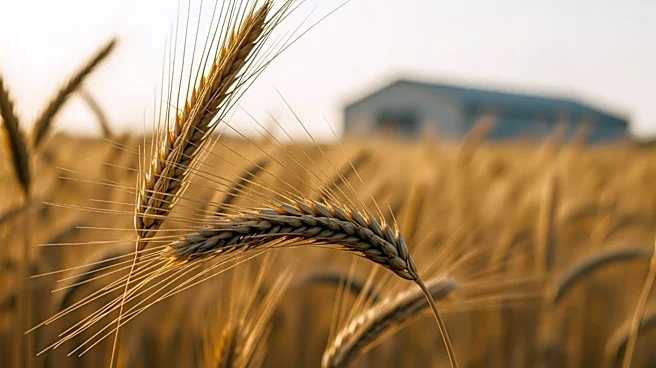
increasing grain yields, particularly in durum wheat, through improved crop rotation and irrigation management. It also focuses on digitizing processes and enhancing grain storage and processing capacity. Additionally, Tunisia aims to boost exports of high-quality packaged olive oil and renew olive groves. The Prime Minister, Sarra Zaafrani Zenzri, emphasized restoring livestock numbers as a priority for food security, with plans to increase farm productivity and introduce digital systems for monitoring animal health.
Why It's Important?
This strategic plan is crucial for Tunisia as it seeks to strengthen its agricultural sector and achieve food security amidst climate challenges. By increasing self-sufficiency in grain production and enhancing olive oil exports, Tunisia can reduce its reliance on imports and improve its economic stability. The focus on livestock restoration and productivity improvements will support rural communities and contribute to national food security. The plan's emphasis on digitization and sustainable practices reflects a forward-thinking approach to agriculture, which could serve as a model for other countries facing similar challenges.
What's Next?
Tunisia will likely continue to implement the strategic plan with a focus on collaboration between government agencies and local farmers. Monitoring and evaluation mechanisms will be essential to track progress and make necessary adjustments. The government may also seek international partnerships to support the plan's objectives, particularly in areas like technology transfer and investment in agricultural infrastructure. Stakeholders, including farmers and industry leaders, will play a critical role in ensuring the plan's success.