
What's Happening?
The U.S. Centers for Disease Control and Prevention (CDC) has issued a warning that the current Ebola outbreak in Central Africa could escalate to levels similar to the 2014-2016 West Africa outbreak,
which resulted in over 11,000 deaths. The CDC's analysis, based on computer models, suggests that the number of cases could range from 10,000 to over 20,000, depending on the effectiveness of public health interventions. The World Health Organization has already declared the outbreak a global health emergency. The situation is further complicated by ongoing armed conflicts in the region, which have led to significant population displacement, hindering efforts to control the spread of the virus.
Why It's Important?
The potential escalation of the Ebola outbreak in Central Africa poses significant public health challenges, not only for the region but also for global health security. The CDC's projections highlight the urgent need for effective public health interventions to prevent a crisis similar to the 2014 outbreak. The ongoing conflict in the region exacerbates the situation, making it difficult to implement containment measures. This development underscores the importance of international cooperation and support to address both the health crisis and the underlying socio-political issues contributing to the outbreak's spread. Failure to contain the virus could lead to widespread health, economic, and social impacts, affecting millions of people.
What's Next?
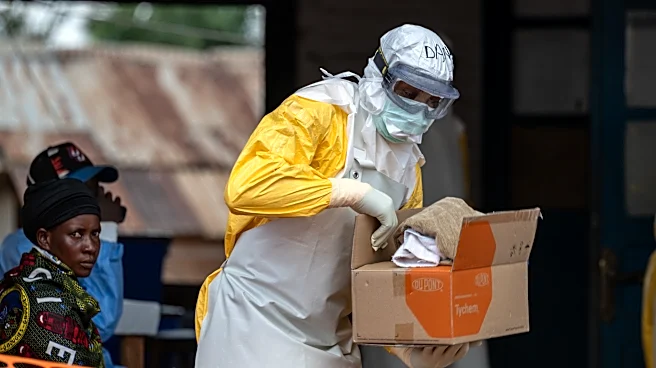
Efforts to contain the outbreak will likely focus on increasing the isolation and treatment of infected individuals, as well as improving surveillance and reporting systems. International health organizations and governments may need to enhance their support for the affected regions, providing resources and expertise to manage the crisis. The ongoing conflict in the area presents a significant barrier to these efforts, and addressing the security situation may be crucial to the success of health interventions. The global health community will be closely monitoring the situation, ready to adjust strategies as new information becomes available.