
What's Happening?
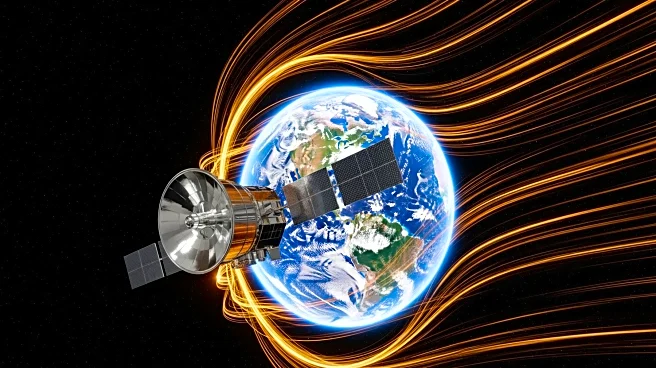
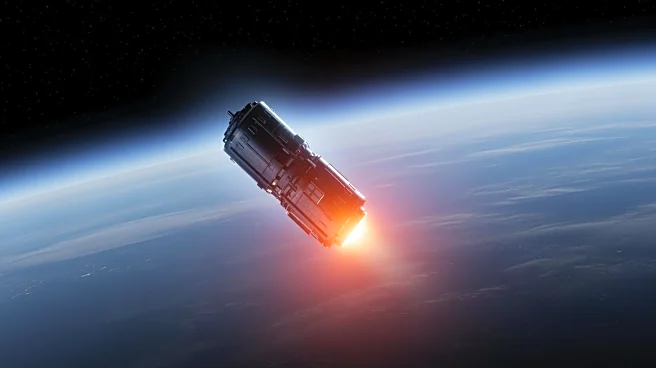
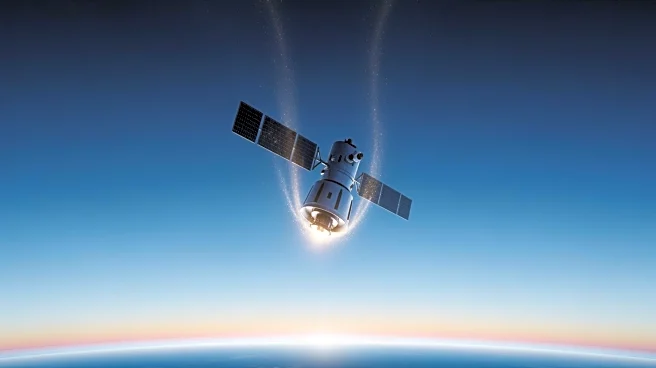
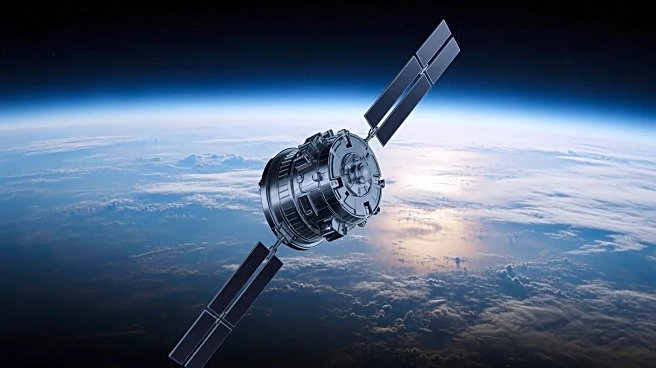
NASA's Van Allen Probe A, a spacecraft launched in 2012 to study the Van Allen radiation belts, is expected to re-enter Earth's atmosphere on March 10, 2026. The U.S. Space Force predicts the re-entry will occur around 7:45 p.m. EDT, with a 24-hour margin
of uncertainty. The 1,323-pound spacecraft is anticipated to mostly burn up upon re-entry, though some components may survive. The risk of harm to individuals on Earth is low, estimated at 1 in 4,200. The probe, along with its twin, Probe B, was initially launched for a two-year mission but continued to gather data until 2019 when they ran out of fuel. The mission provided significant insights into the radiation belts, including the discovery of a transient third belt.
Why It's Important?
The re-entry of Van Allen Probe A highlights the challenges and risks associated with space debris. While the risk to human life is minimal, the event underscores the importance of monitoring and managing space debris to prevent potential hazards. The data collected by the Van Allen Probes has been crucial in understanding space weather, which can affect satellites, communication networks, and power grids on Earth. This knowledge is vital for future space missions, especially those venturing beyond Earth's orbit, as they will need to navigate through these radiation belts.
What's Next?
NASA and the U.S. Space Force will continue to monitor the re-entry of Van Allen Probe A and provide updates. The twin spacecraft, Van Allen Probe B, is not expected to re-enter the atmosphere before 2030. The insights gained from the mission will continue to inform space weather forecasts and the planning of future missions, particularly those involving human spaceflight beyond low Earth orbit.