




What's Happening?
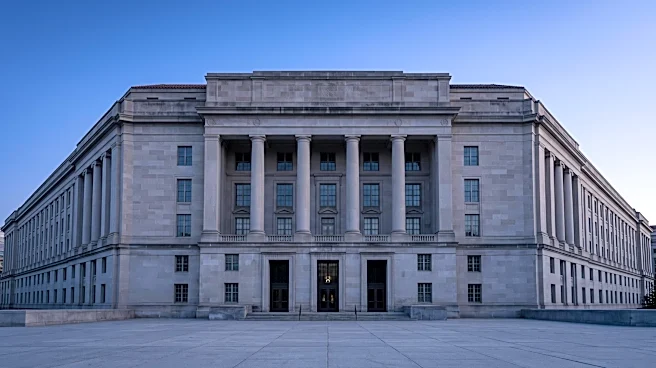
The Justice Department (DoJ) under President Trump has announced plans to deploy 1,000 election monitors for the upcoming November midterm elections, aiming for the largest monitoring effort in the department's history. This initiative has been met with
skepticism from former officials and voting rights experts regarding its feasibility and potential impact. The DoJ has previously taken an adversarial stance, suing some states to access private voter data, leading to concerns among state election officials who feel the federal government is not a partner in protecting elections. President Trump has expressed a desire for federal control over elections, though courts have largely limited these efforts. While federal election monitoring is a routine practice, the scale and context of this announcement have caused unease. In past elections, monitors have generally been described as unobtrusive, with state officials in Minnesota, California, and Arizona reporting no major disruptions from federal monitors in recent primaries and special elections. However, some jurisdictions, like Hennepin and Ramsey counties in Minnesota, declined to allow DoJ monitors inside polling places, citing concerns about voter safety and federal official presence.
Why It's Important?
This development is important because it highlights ongoing tensions between federal and state authorities regarding election oversight and the integrity of the electoral process. The DoJ's aggressive stance on voter data and President Trump's past statements about federalizing elections contribute to a climate of distrust, potentially undermining public confidence in election outcomes. While the stated goal is to ensure compliance with federal voting laws, the large-scale deployment of monitors, especially given the DoJ's recent history of litigation against states, could be perceived as an attempt at intimidation or overreach. This could further politicize election administration, making it more challenging for state and local officials to conduct elections smoothly and impartially. The skepticism from voting rights experts also raises questions about the practical effectiveness and necessity of such a large monitoring force, particularly if it struggles with coordination or if monitors remain largely passive, as some past observations suggest.
What's Next?
The DoJ's plan to deploy 1,000 election monitors will proceed for the November midterm elections. It remains to be seen whether the department can successfully recruit and coordinate such a large number of personnel. State and local election officials will likely continue to monitor the federal monitors' activities closely, as seen in Minnesota, and may impose restrictions on their access to polling places if they deem it necessary to protect voter confidence and prevent disruption. The effectiveness of this monitoring effort in addressing perceived election integrity issues, or conversely, its potential to exacerbate tensions, will become clearer as the election approaches and during the monitoring period. The reactions from various stakeholders, including political leaders, civil society groups, and the public, will also shape the narrative around federal involvement in state elections.
Beyond the Headlines
Beyond the immediate implications for the midterm elections, this situation reflects a deeper ideological struggle over states' rights versus federal authority, particularly in the context of election administration. The push for increased federal monitoring and control, coupled with the DoJ's actions against states, suggests a broader effort to centralize power over elections, which traditionally have been managed at the state and local levels. This could set precedents for future federal interventions, potentially eroding the autonomy of state election systems. The debate also touches upon the perception of election integrity, with federal actions potentially fueling narratives of widespread issues, even if local officials report smooth operations. This dynamic could have long-term consequences for the balance of power in the U.S. federal system and the public's trust in democratic institutions.