






What's Happening?
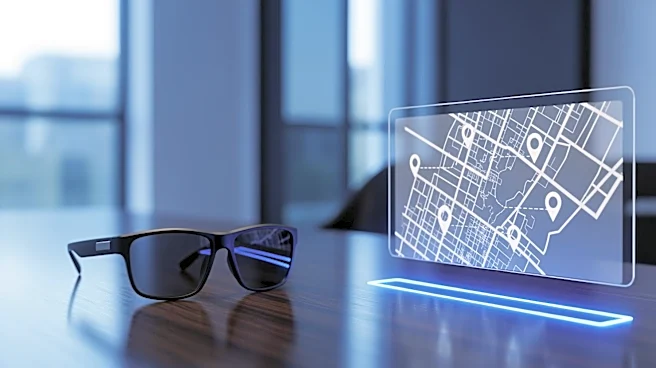
The U.S. Department of Homeland Security has proposed a $7.5 million budget for the development of smart glasses to be used by immigration enforcement agents. These glasses are designed to facilitate real-time biometric recognition of individuals in the country
without legal authorization. The technology, which includes features like built-in cameras and artificial intelligence, is already being sold to the public by companies such as Meta. However, the deployment of such technology by law enforcement has raised privacy concerns. Illinois, for instance, has strong biometric privacy laws, but these protections may not fully cover the capabilities of smart glasses, especially in public spaces.
Why It's Important?
The introduction of smart glasses for immigration enforcement could significantly impact privacy norms and civil liberties in the U.S. The technology's ability to perform real-time biometric recognition poses a threat to personal anonymity and could lead to increased surveillance. Civil liberties groups have expressed concerns about potential abuses of this technology, which could lead to unauthorized data collection and privacy violations. The rapid advancement of such technologies often outpaces the development of corresponding legal frameworks, leaving gaps in privacy protection.
What's Next?
As the proposal moves forward, it is likely to face scrutiny from privacy advocates and civil liberties organizations. There may be calls for stricter regulations and oversight to ensure that the deployment of smart glasses by law enforcement does not infringe on individual rights. Additionally, public discourse may influence legislative action to update privacy laws to better address the capabilities of emerging technologies.