

What's Happening?
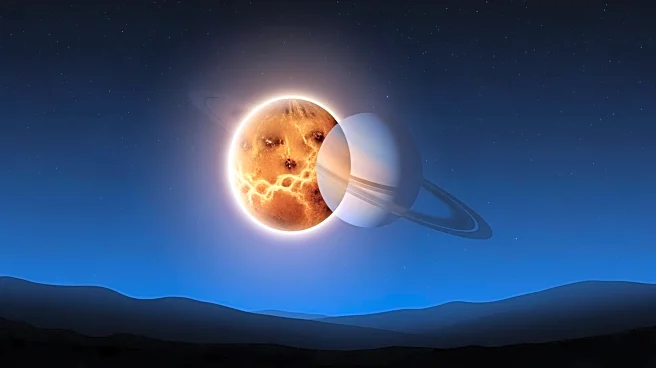
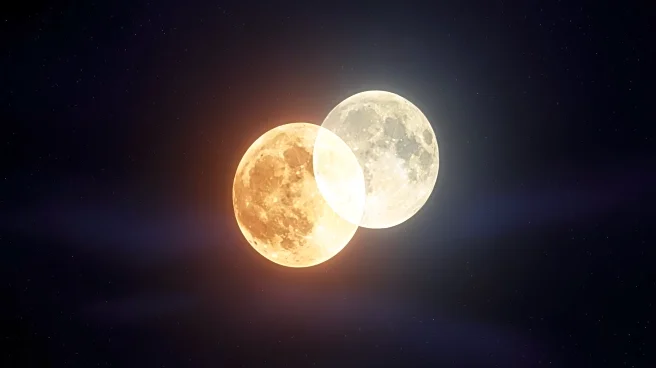
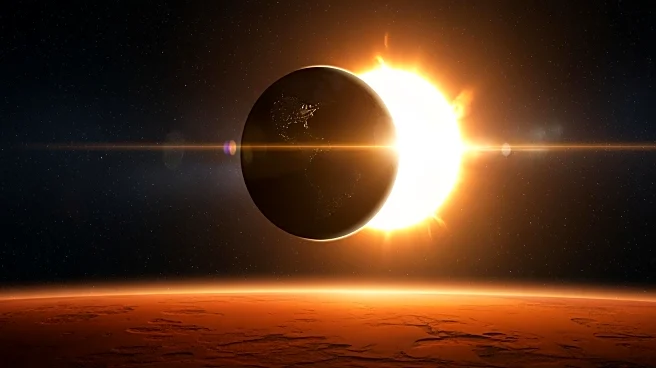
Earth transits the Sun as seen from Mars only four times in a 284-year cycle, with the next occurrence on November 10, 2084. During these transits, Earth and the Moon appear as small black dots moving across the Sun's disk. The transits occur in May or
November, with intervals of 100.5, 79, 25.5, and 79 years. The last transit was on May 11, 1984, and was featured in a science fiction story by Arthur C. Clarke. These events require precise alignment of Mars, Earth, and the Sun, and are visible through a telescope with appropriate solar filters.
Why It's Important?
The rarity of Earth's transit of the Sun from Mars highlights the unique celestial mechanics of our solar system. Such events provide valuable opportunities for scientific observation and public engagement with astronomy. Observing these transits can help scientists study planetary alignments and refine models of celestial motion. For the public, these transits offer a dramatic demonstration of the vast distances and alignments in space, fostering interest in astronomy and space exploration. As humanity plans for future missions to Mars, understanding these celestial events becomes increasingly relevant for both scientific and cultural reasons.