








What's Happening?
Uzbekistan and Azerbaijan have initiated a comprehensive promotional campaign across Europe to bolster their presence in the competitive travel market. This initiative, which took place between October 19 and 22, 2026, covered four major European cities:
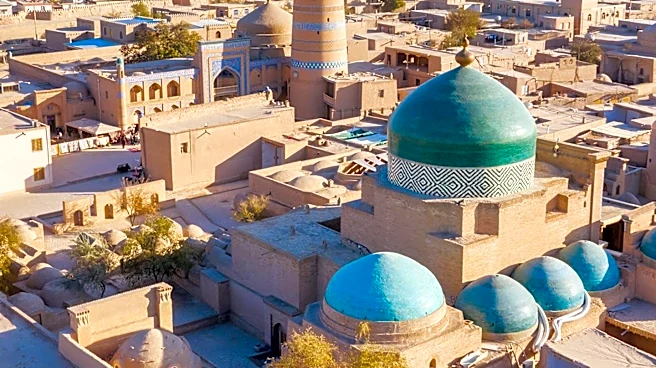
Berlin, Munich, Stockholm, and Helsinki. The campaign aims to position both countries as complementary destinations, offering combined holiday packages that highlight their rich cultural and historical attractions, particularly those along the Silk Road. Over 140 participants representing more than 80 organizations engaged in business-to-business meetings to explore potential partnerships and develop multi-country travel programs. Key destinations promoted include Samarkand, Bukhara, and Khiva in Uzbekistan, known for their Islamic architecture and Silk Road history, and Baku, Shamakhi, and Sheki in Azerbaijan, recognized for their UNESCO-listed sites and cultural heritage. Airlines such as Azerbaijan Airlines, Turkish Airlines, Uzbekistan Airways, and Centrum Air also participated to discuss international travel opportunities and accessibility.
Why It's Important?
This joint tourism campaign signifies a strategic shift from independent marketing to a coordinated approach, leveraging the shared Silk Road heritage of Uzbekistan and Azerbaijan. By offering combined itineraries, the initiative seeks to attract European travelers interested in history, architecture, and cultural exploration, potentially encouraging longer stays and increased spending in the region. The focus on key European markets like Germany, Finland, and Sweden aims to diversify international visitor markets and establish stronger commercial relationships with European tourism businesses. While confirmed sales volumes and additional visitor arrivals directly from this campaign have not yet been announced, the effort lays a foundation for future tourism growth. Successful implementation could lead to significant economic benefits for hotels, local guides, transport providers, and travel agencies in both countries, contributing to regional economic development and job creation within the tourism sector.
What's Next?
The October 2026 campaign is part of a broader, long-term tourism partnership between Uzbekistan and Azerbaijan, building on earlier promotional activities in other European markets. Future steps will likely involve continued joint international marketing, participation in tourism exhibitions, and the development of new travel products that connect the two countries. The memorandum signed in July 2026 provides a framework for promoting the 'Joint Silk Road Highlights Tour' internationally, suggesting ongoing collaboration. The success of these initiatives will depend on converting the interest generated during the roadshows into actual bookings and visitor arrivals. Both countries will need to monitor the commercial success of the proposed packages and adapt their strategies to meet market demand. The participation of airlines and tourism industry partners indicates a sustained effort to enhance air connectivity and travel accessibility, which will be crucial for the campaign's long-term impact.
Beyond the Headlines
This collaborative tourism strategy extends beyond mere economic benefits, fostering deeper cultural exchange and understanding between Europe and the Central Asian/Caucasian regions. By highlighting their shared Silk Road heritage, Uzbekistan and Azerbaijan are not only promoting tourism but also preserving and showcasing their historical and cultural identities on a global stage. The initiative could also serve as a model for other regions seeking to boost tourism through multi-country partnerships, emphasizing the value of collective branding and coordinated marketing efforts. Furthermore, the focus on cultural tourism can contribute to the sustainable development of local communities by supporting traditional crafts, arts, and historical sites. The long-term success of such ventures can enhance diplomatic ties and regional stability by promoting mutual interests and shared prosperity through cultural diplomacy.