



What's Happening?
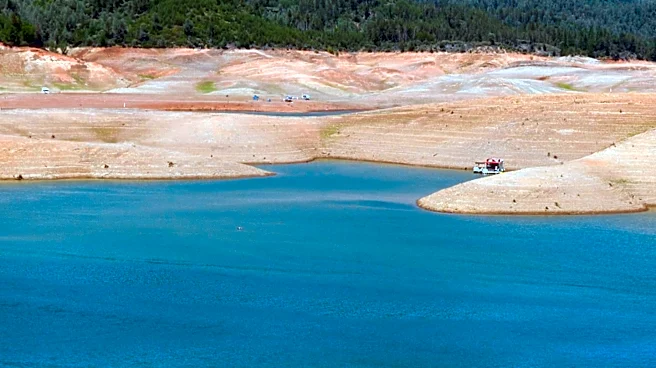
The Colorado River District, in collaboration with the Colorado Water Trust and the Yampa River Fund, has begun releasing water from Elkhead Reservoir to address severe drought conditions affecting the Yampa River Valley. The initiative, part of the Yampa River Reservoir Release
Program, aims to alleviate drought impacts on agricultural producers and support river health. The program, established in 2021, involves a 2,000-acre-foot water pool to enhance streamflows and protect critical habitats for endangered fish species. The releases are coordinated to optimize water use across the basin, providing benefits to local communities and the environment.
Why It's Important?
This initiative highlights the collaborative efforts required to manage water resources effectively in the face of climate change and prolonged drought. By coordinating reservoir releases, the program supports agricultural activities, maintains river ecosystems, and helps prevent water shortages. The approach demonstrates the importance of adaptive water management strategies that balance human and environmental needs. As drought conditions persist, such initiatives are crucial for sustaining agricultural productivity and preserving biodiversity. The program also serves as a model for other regions facing similar water challenges, emphasizing the need for cooperation among stakeholders to address complex environmental issues.
What's Next?
The Colorado River District and its partners will continue to monitor water conditions and adjust reservoir releases as needed. Ongoing collaboration with agricultural producers and environmental organizations will be essential to ensure the program's success. The initiative may inspire similar efforts in other drought-affected areas, promoting the adoption of integrated water management practices. As climate change continues to impact water availability, stakeholders will need to explore innovative solutions to enhance water resilience and support sustainable development. The program's outcomes could inform future policies and investments in water infrastructure and conservation.