






What's Happening?
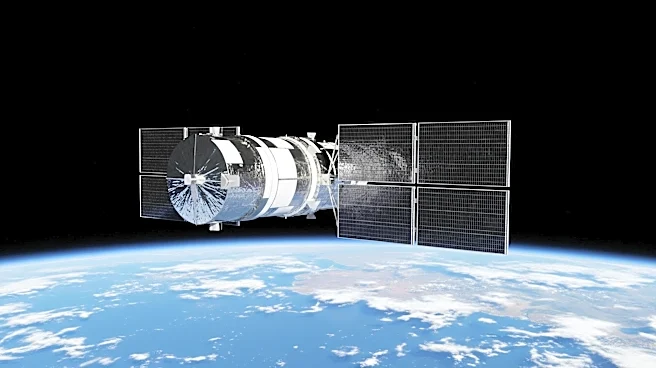
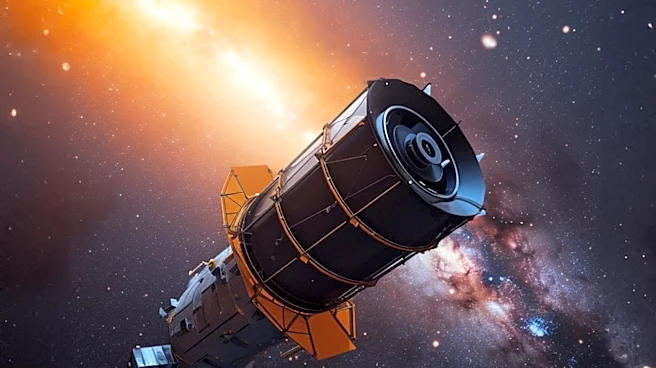
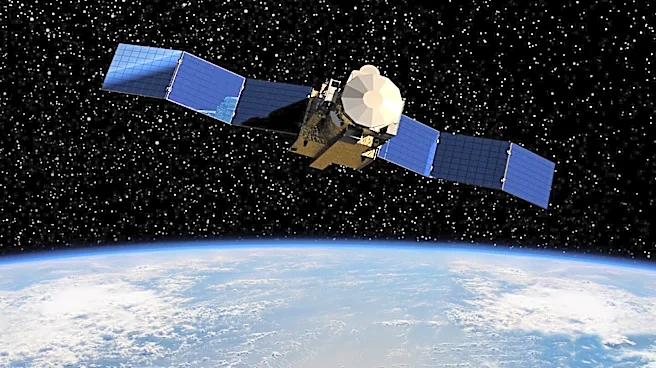
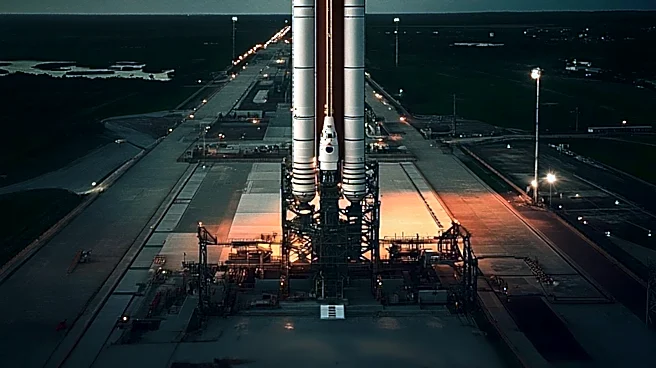
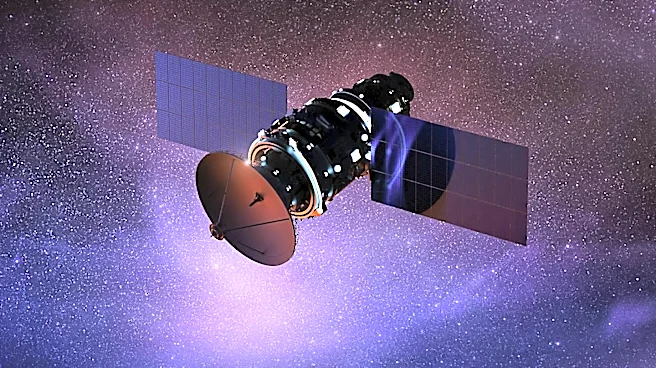
A Northrop Grumman Pegasus XL rocket launched a mission to reboost NASA's Swift Observatory, which is in a decaying orbit. The rocket was deployed from its L-1011 carrier aircraft and successfully placed the Link spacecraft into low Earth orbit. Katalyst
Space developed Link under a $30 million NASA contract to save the Swift spacecraft. The mission aims to raise Swift's orbit to prevent reentry, using Link's ion engines. This mission is considered high-risk due to the challenges of servicing a spacecraft not designed for such operations.
Why It's Important?
The Swift reboost mission is significant for the astrophysics community, as the observatory provides unique capabilities for monitoring gamma-ray bursts and other high-energy phenomena. Successfully extending Swift's mission could set a precedent for similar efforts, including potentially for the Hubble Space Telescope. The mission also highlights the potential for satellite servicing technology to extend the life of valuable space assets, which could have broader implications for space exploration and commercial satellite operations.
What's Next?
Katalyst Space will conduct in-orbit checks of the Link spacecraft before it approaches Swift for a survey. If successful, Link will attach to Swift and use its engines to raise the orbit. The reboost process will take three months, after which Swift will resume science operations. The mission's success could encourage further investment in satellite servicing technologies and influence future NASA missions.