



What's Happening?
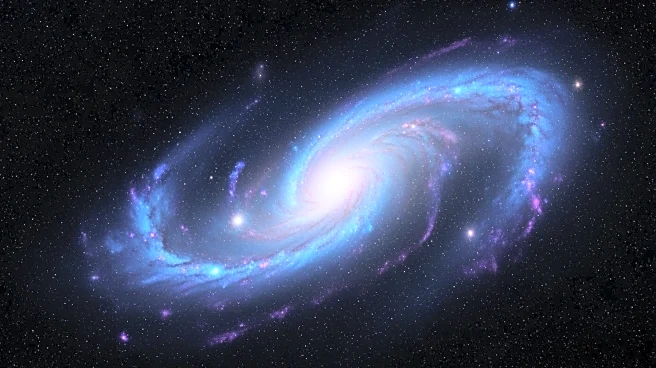
The Hubble Space Telescope has captured an image of the galaxy NGC 4388, located in the Virgo galaxy cluster, revealing a plume of gas emanating from the galaxy's nucleus. This outflow is believed to be caused by the galaxy moving through the intracluster
medium, which strips gas from its disk. The ionizing energy that causes the gas to glow may originate from a supermassive black hole at the galaxy's center, with shock waves contributing to the ionization of gas filaments further out. The image incorporates new data, providing a detailed view of the ionized gas cloud.
Why It's Important?
The observation of gas outflows in galaxies like NGC 4388 helps astronomers understand the dynamics of galaxy clusters and the interactions between galaxies and their environments. These findings contribute to the broader understanding of galaxy evolution and the role of supermassive black holes in shaping galactic structures. The data from Hubble's observations can inform future studies of similar phenomena and enhance models of galaxy behavior in dense cosmic environments. This research is crucial for piecing together the history and development of the universe.