


What's Happening?
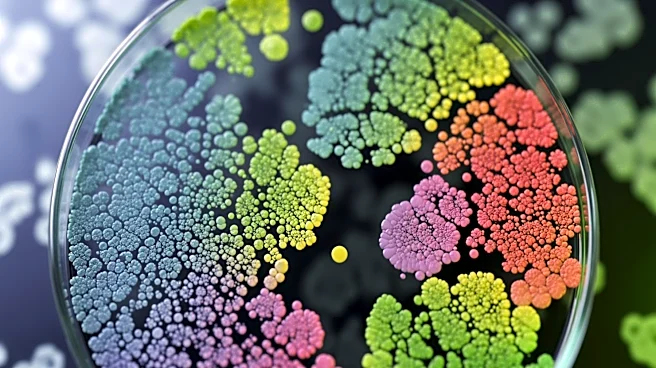
Research from the University of East Anglia has identified a unique microbial 'fingerprint' in colorectal cancer, distinguishing it from other cancer types. This discovery could reshape understanding and treatment of the disease. The study analyzed whole
genome sequencing data from over 9,000 cancer patients, revealing that only colorectal tumors consistently showed a unique microbial community. This finding challenges the assumption that each cancer type has a distinct microbiological signature. The research suggests that microbes may influence cancer progression and patient survival, potentially serving as biomarkers for diagnosis and treatment response.
Why It's Important?
The identification of a distinct microbial signature in colorectal cancer has significant implications for cancer diagnosis and treatment. It suggests that microbial communities could be used to more accurately diagnose colorectal cancer and predict patient outcomes. This could lead to more personalized treatment plans, improving survival rates and reducing unnecessary treatments. The study also highlights the growing importance of whole genome sequencing in clinical settings, offering a cost-effective tool for enhancing cancer care by identifying pathogenic organisms that may otherwise go undetected.
What's Next?
Further research is needed to explore the clinical applications of these findings. The integration of microbial analysis into routine cancer diagnostics could become a standard practice, requiring updates to current medical protocols and training for healthcare professionals. Collaboration between researchers, clinicians, and policymakers will be essential to translate these findings into practical applications. Additionally, the development of new treatments targeting specific microbial communities in colorectal cancer could emerge as a promising area of research.
Beyond the Headlines
The study raises questions about the role of the microbiome in cancer biology and the potential for microbes to influence treatment outcomes. Ethical considerations regarding the manipulation of microbial communities in patients must be addressed. The findings also underscore the need for interdisciplinary approaches in cancer research, combining genomics, microbiology, and oncology to develop comprehensive treatment strategies.