

What's Happening?
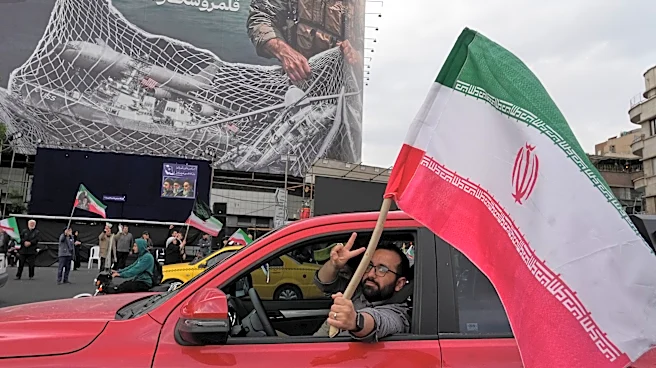
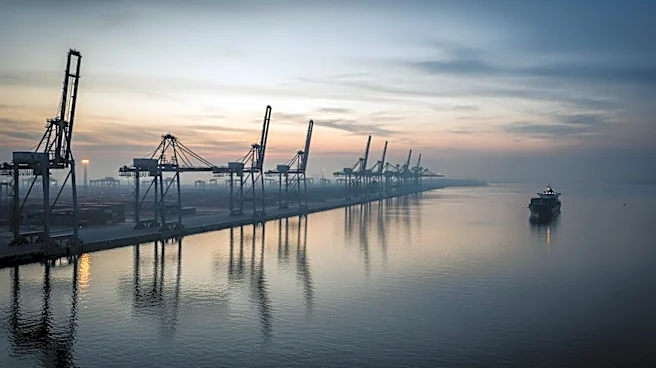
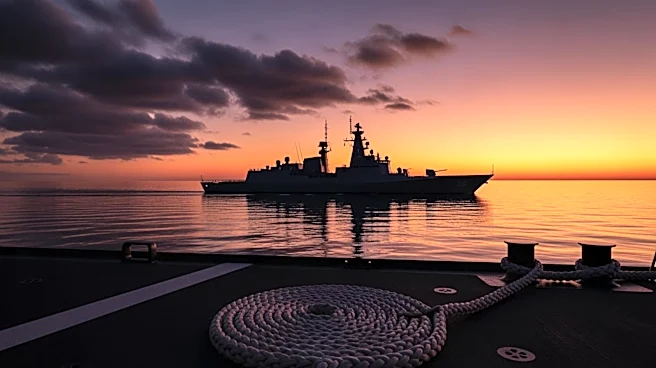
The United States has fully implemented a blockade of Iranian ports, effectively cutting off Tehran's international sea trade, which constitutes about 90% of its economy. This action follows President Trump's order and involves a significant deployment
of U.S. military forces, including over 10,000 troops and numerous Navy ships and fighter jets. The blockade, which began amid a fragile ceasefire, aims to halt economic trade through the Strait of Hormuz, a critical channel for global oil supplies. The U.S. Central Command confirmed that no ships have passed the blockade, although some vessels attempted to navigate the strait. The blockade is estimated to cost Iran approximately $435 million daily in economic damage.
Why It's Important?
The blockade represents a significant escalation in U.S.-Iran tensions, with potential implications for global energy markets and international relations. By disrupting Iran's primary trade route, the U.S. aims to exert economic pressure on Tehran, potentially influencing its geopolitical strategies. However, this move risks straining U.S. relations with countries reliant on Iranian oil, such as China and India. The blockade could also contribute to volatility in global oil prices, impacting economies worldwide. The situation underscores the complex interplay between military actions and economic consequences in international diplomacy.
What's Next?
The U.S. has signaled a willingness to pursue diplomatic solutions, suggesting potential negotiations with Iran to de-escalate the conflict. The international community, particularly countries with vested interests in Middle Eastern stability, will likely monitor developments closely. The blockade's impact on global oil prices and trade routes may prompt further diplomatic engagements or economic adjustments. Additionally, the U.S. may face pressure to balance military strategies with diplomatic efforts to maintain regional stability and protect global economic interests.